Demystifying the 401(k): Beyond the Basics
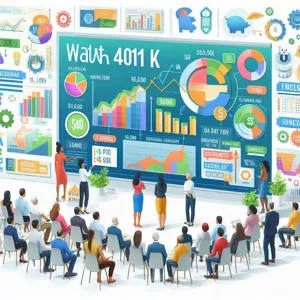
A 401(k) is not just a payroll deduction; it is a specialized tax-advantaged vessel for your capital. Think of it as a private vault where the government allows you to stash money today, provided you agree not to touch it until your later years. By bypassing immediate taxation, you allow your money to compound—a process where your interest earns interest, much like a snowball gaining mass as it rolls down a hill.
The Core Mechanics of Your Contribution
When you contribute to a traditional 401(k), you are reducing your current taxable income. If you earn $60,000 and contribute $6,000, the IRS only taxes you as if you earned $54,000. This is an immediate tax savings.
- Pre-tax dollars: You save on taxes now, but pay income tax on withdrawals later.
- Roth 401(k): You pay taxes on your contributions today, but your withdrawals in retirement are entirely tax-free.
- The Trade-off: Choose a traditional 401(k) if you are in a high tax bracket now. Choose a Roth 401(k) if you believe your tax rate will be higher when you retire.
The Employer Match: Your Guaranteed Return
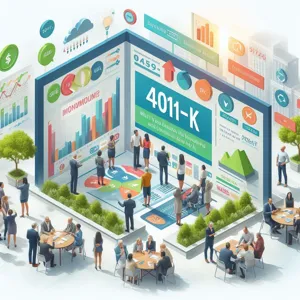
If your employer offers a match, treat it as a mandatory investment. Suppose your company matches 50% of your contributions up to 6% of your salary. If you earn $50,000 and contribute 6% ($3,000), they add $1,500. That is an instant 50% return on your money before the market even moves. Ignoring this is equivalent to turning down a pay raise.
Understanding Vesting: The Golden Handcuffs
Vesting is the schedule that dictates when the employer-contributed money actually becomes yours. Your own contributions are always 100% yours, but the match is often conditional.
- Cliff Vesting: You get nothing for three years, then suddenly 100% of the matching funds become yours.
- Graded Vesting: You gain ownership in increments, such as 20% per year over five years.
- Field Note: Always check your vesting schedule before quitting. If you are at 80% vesting and leave a month early, you might lose thousands in unvested company contributions.
Investment Selection: How to Build Your Portfolio

Most 401(k) plans offer a limited menu of mutual funds. Do not fall into the trap of analysis paralysis. If you want a hands-off approach, look for a Target Date Fund (TDF). A TDF automatically shifts from aggressive stocks to conservative bonds as your retirement date nears. It is the financial equivalent of a car that steers itself based on your destination.
Strategic Contribution Limits
The IRS sets firm boundaries for annual contributions. For 2024, the limit is $23,000, with an extra $7,500 allowed as a catch-up contribution for those aged 50 or older. If you hit these limits, consider them your annual performance goals. Every dollar under that cap is a missed opportunity for tax-deferred growth.
Common Pitfalls and How to Pivot

Field experience shows that even savvy professionals make preventable mistakes. Use this checklist to stay on track:
- The Loan Trap: Taking a loan from your 401(k) disrupts the compounding process. You lose the growth that money would have generated while it was out of the market.
- The Fee Blindness: Look for the expense ratio on your funds. A 1% fee might sound small, but over 30 years, it can consume a massive portion of your total portfolio value.
- The Rollover Stagnation: When changing jobs, do not leave your old 401(k) sitting in a legacy account with limited options. Roll it over into an IRA or your new employer’s plan to centralize management and lower costs.
The Power of Early Action
Time is the only asset you cannot recover. A $5,000 investment at age 25 is mathematically superior to a $20,000 investment at age 45 due to the 20 extra years of compounding. If you are starting late, focus on maximizing your annual contributions and minimizing high-fee investment choices. Your 401(k) is a tool; its efficiency depends entirely on your discipline and your ability to avoid unnecessary withdrawals. Treat every paycheck like an opportunity to buy a better version of your future self.
Contenu mis a jour le 2026-08-22