Handling a motorcycle isn’t about brute force; it is about managing energy. Think of your bike as a system of pivots. When you accelerate, the weight shifts to the rear; when you brake, it dives to the front. To improve, you must stop fighting these natural physics and start working with them.
The Golden Rule: Keep your inputs smooth. If you chop the throttle or stab the brakes, you disrupt the bike’s suspension geometry, making it unstable. Imagine your controls are connected to the bike by rubber bands rather than solid cables—everything must be applied with a gradual, progressive motion.
Optimizing Your Body Position
Your body is the primary ballast for your motorcycle. If you are stiff and locked to the handlebars, you are fighting the bike’s ability to stabilize itself. You need to act as an active part of the machine’s suspension.
Grip with your knees: Use your legs to anchor your torso to the fuel tank. This takes the weight off your wrists and allows your hands to remain light on the controls.
Elbows out and relaxed: A bent-elbow stance gives you a wider range of motion for steering inputs and better vibration absorption.
Weight distribution: During cornering, shift your weight toward the inside peg. This lowers the center of gravity and allows the bike to turn with less lean angle, preserving more of your tire’s contact patch.
The Precision of Throttle and Brake
Credit : whatcanu.com
Throttle control is the key to suspension stability in a turn. If you roll off the throttle mid-corner, the bike stands up and loses its line. If you roll on too aggressively, you risk spinning the rear tire.
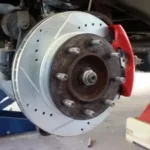
Pro-tip: Practice ‘maintenance throttle.’ Once you enter a corner and reach the apex, apply just enough power to maintain a constant speed. This keeps the suspension settled and the bike balanced. For braking, remember that your front brake provides roughly 70-80% of your stopping power. Always lead with the front, then ‘trail’ (add) the rear brake to settle the chassis.
Cornering: The Look-Ahead Strategy
Your bike follows your eyes. If you stare at the patch of gravel or the obstacle you are trying to avoid, you will almost certainly hit it—this is known as target fixation. You must train your brain to scan for your ‘exit path’ rather than the immediate hazard.
Credit : whatcanu.com
Execution: As you approach the turn, look through the corner toward where you want to exit. Your neck should rotate as you enter, keeping your chin pointed toward the exit. This naturally aligns your body and steering inputs to guide the bike along the correct trajectory.
Managing Road Imperfections and Hazards
No road is perfect. When you encounter a mid-corner pothole, the worst thing you can do is brake hard or chop the throttle. If you cannot avoid it, stay loose. Rigid muscles transfer the shock directly into the frame, causing the bike to lose its line.
Field Experience: If you are caught by surprise, tighten your core, keep your eyes up, and let the bike ‘dance’ beneath you. If you allow the handlebars to move slightly while keeping your body relaxed, the motorcycle’s rake and trail geometry will naturally fight to keep it upright and tracking straight.
Training: Beyond the Sunday Ride
Credit : whatcanu.com
You cannot develop high-level muscle memory on a highway where you are focused on traffic. You need dedicated, low-speed training sessions. Find a vacant lot and set up simple maneuvers like the ‘figure-eight’ or ‘offset weaving.’
The Clutch-Drag Method: At very low speeds, use the rear brake to provide resistance while feeding in slight throttle. This creates tension in the drivetrain, allowing for incredibly tight, stable turns.
Emergency Braking Drills: Practice quick-stop exercises until you can bring the bike to a halt without chirping the tire or activating the ABS (if applicable).
Advanced Instruction: Enroll in a track day or a professional advanced handling course. The feedback from an instructor can correct subtle flaws in your posture that you might not even feel on your own.
Maintenance as a Handling Factor
You can have the best technique in the world, but if your bike is improperly set up, your handling will suffer. A chain that is too loose creates ‘snatchy’ throttle response. Tires at the wrong pressure change the turn-in speed of the bike. Check your tire pressure before every ride; even a 3-psi drop can change the contact patch geometry enough to make the steering feel sluggish.
Final Advice: The Mindset of Mastery
Improvement is a cumulative process. Do not try to change your braking, cornering, and body position all at once. Pick one area—for example, your cornering lines—and focus on it for an entire week of riding. Once it becomes automatic, move to the next skill. This is how you build true, instinctive, and safe riding proficiency.