How to Handle a Car Accident: A Practical Field Guide
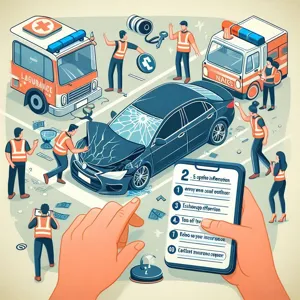
A car accident is never a planned event. In the split second after an impact, your body is flooded with adrenaline, which can mask injuries and cloud your judgment. This guide cuts through the noise to provide a clear, step-by-step framework to manage the scene, protect your legal interests, and ensure your physical recovery.
1. The Immediate Priorities: Safety and Assessment
Your first move must be entirely reactive to safety. Turn on your hazard lights immediately to signal your presence to other motorists. Before you do anything else, perform a self-assessment.
- Physical Scan: Check your limbs and head. Adrenaline is a powerful painkiller; you may have a concussion or fracture and not realize it for 30 minutes.
- Passenger Check: If you have passengers, confirm their status before checking the state of the vehicle.
- Moving to Safety: If the car is driveable and you are on a high-speed road, move to the shoulder. If the vehicle is disabled in a dangerous position, leave it and get yourself to a protected area off the road. Never stay inside a disabled car on a busy highway.
2. The Golden Rule of Documentation
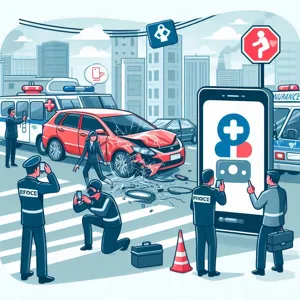
Memory is unreliable after trauma. You need objective data to prove what happened. Treat the accident scene like a professional investigator would.
- The Panoramic Shot: Take photos of the entire scene, including traffic signals, road markings, and the position of all vehicles involved.
- Damage Close-ups: Photograph the specific points of impact on both vehicles. Do not skip this; insurance adjusters use these photos to reconstruct the speed and angle of the collision.
- Environmentals: Document skid marks, broken glass, and weather conditions. These are key variables that change quickly as the scene clears.
3. Managing Conversations at the Scene
Human nature leads many to apologize after an accident, even if they aren’t at fault. Do not do this.
- Avoid Admitting Fault: Phrases like “I’m so sorry” or “I didn’t see you” can be interpreted by insurance companies as a legal admission of liability.
- Stick to the Facts: Exchange contact information, license plate numbers, and insurance details. If the other driver becomes aggressive, disengage and wait inside your vehicle for the police to arrive.
- Witness Gathering: If someone stopped to watch, ask them for their contact information immediately. A third-party account is worth more than ten conflicting stories between two drivers.
4. When to Involve Authorities
Many drivers opt to settle minor accidents privately to save on premiums. This is often a mistake. Always file a police report if there is property damage or any sign of injury.
Think of the police report as your “official anchor.” If the other driver later changes their story, the police report acts as a hard boundary for the insurance adjusters. If the police refuse to come because the damage is too minor, go to the nearest station and file a counter-report on your own. Documentation is your best insurance policy.
5. The Medical Reality Check
Error to avoid: Assuming you are fine because you don’t see blood. Soft tissue injuries, such as whiplash or internal bruising, often take 24 to 48 hours to manifest.
- Seek Professional Evaluation: Go to an Urgent Care or ER immediately. This creates a timestamped medical record that links the injury directly to the accident date.
- Follow the Protocol: If a doctor suggests a follow-up, do it. Insurance companies look for gaps in treatment as a reason to deny claims for long-term injuries.
6. Dealing with Insurance Companies
When you call your insurer, understand that they are businesses. They have a script to follow. You should also have one.
- Keep it Brief: Provide only the facts: date, time, location, and the other party’s information. Do not speculate on “how” the accident happened beyond the basic sequence of events.
- Don’t Sign Anything Prematurely: Never sign a “final settlement” release until you are 100% sure your medical and vehicle repair costs are fully understood.
- Log Every Call: Keep a notebook. Write down the name of the adjuster, the time of the call, and exactly what was promised. If there is a dispute, this log is your primary evidence.
7. Field Experience: Why You Might Need a Lawyer
Legal counsel is not just for major crashes. You should consult an attorney if:
- The other party was driving under the influence or without insurance.
- The accident involves a commercial vehicle (trucking companies have teams of lawyers, you shouldn’t face them alone).
- Your insurance company is denying a valid claim or acting in bad faith by stalling.
8. Preventing Future Recurrence
Accidents are rarely just “bad luck.” Most are the result of broken habits. Audit your own driving regularly.
- The Three-Second Rule: On the highway, pick a stationary object. When the car ahead passes it, count to three. If you pass it before you reach three, you are following too closely. This is the #1 way to prevent rear-end collisions.
- The Phone Lock: If your phone is within reach, you will check it. Keep it in the glove box or use a “Do Not Disturb While Driving” mode to remove the temptation entirely.
- Predictive Scanning: Don’t look at the bumper in front of you. Look at the car ahead of the car ahead. This gives you extra milliseconds to react to braking patterns.
Handling a car accident effectively is about keeping a cool head and focusing on facts. Prioritize your health, document everything, and treat the incident as a business transaction until it is resolved. You cannot control other drivers, but you can control your preparedness.
Content updated on 2026-09-12