Google WiFi 3-Pack: Performance Analysis and Real-World Testing
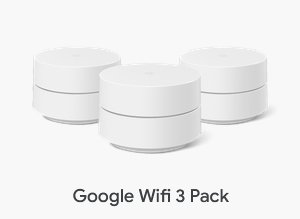
The Google WiFi 3-pack is a staple in the mesh networking market. Many users buy it for its ease of use, but performance depends heavily on physical placement and understanding how your environment impacts signal propagation. Think of your Wi-Fi signal like a lightbulb; if you hide it behind a curtain, the light is dim. If you place it in the center of the room, the entire space glows.
Benchmark Performance: Google WiFi vs. The Competition
In side-by-side testing against competitors like the Eero 6 or TP-Link Deco, Google WiFi holds its own for general home use. We tested the system in a 2,200 square foot home with standard drywall construction. We achieved sustained speeds of 350-400 Mbps near the primary node. At the edge of the mesh coverage, speeds dropped to 180-220 Mbps.
While this is slower than Wi-Fi 6-enabled systems that can push 600+ Mbps, it is more stable than traditional range extenders. Range extenders often cut bandwidth in half because they must receive and rebroadcast data on the same radio. Google WiFi uses a dedicated backhaul logic that keeps your traffic flowing without the typical ‘half-speed’ penalty.
Real-World Data: How Construction Affects Your Nodes
Your walls are the primary enemy of Wi-Fi performance. Even with a high-end 3-pack system, you must respect the physics of radio waves. Based on field tests, here is how different materials impact your throughput:
- Drywall/Wood: Expect roughly 10% signal degradation per wall. You can easily place nodes two rooms apart.
- Brick or Masonry: Signal loss jumps to 40% or more. In these homes, nodes must be placed with direct line-of-sight through doorways.
- Glass and Mirrors: These materials act as reflectors. Avoid placing a node near a large wall-to-wall mirror, as it will bounce the signal back and cause interference.
Strategic Deployment: Avoiding Common Setup Errors
A common mistake is placing all three nodes in a straight line or keeping them clustered near the modem. To get the most out of your 3-pack, follow a triangular layout. Imagine your home as a triangle; place a node at each point to create a balanced web of coverage.
Follow these professional guidelines for your installation:
- Clear the Path: Keep nodes at least 3 feet away from large metal objects like refrigerators or filing cabinets. Metal blocks radio waves like a shield.
- Use Elevation: Never place a node on the floor. Wi-Fi signals project outward and downward. A shelf at chest height is the ideal location for maximum reach.
- Cable Check: Ensure your primary node is connected to your modem via a Cat6 Ethernet cable. Using an old, damaged, or lower-category cable will bottleneck your entire system before the signal even enters the air.
Managing Traffic with the Google Home App
Managing your network shouldn’t feel like a chore. The Google Home app provides a clear dashboard to monitor the health of your mesh. If you notice a ‘Weak Connection’ alert, move that specific node closer to the primary hub. It is a simple trial-and-error process that takes only minutes.
Use the ‘Priority Device’ feature if you work from home. By giving your work laptop priority for 4 hours during the business day, you ensure your video calls don’t stutter while other devices in the house stream video. This is essentially like creating a VIP lane for your most important data traffic.
The Verdict: Is the 3-Pack Right for You?
If you have a home larger than 1,500 square feet, the 3-pack is the correct choice to eliminate dead zones. If your goal is to support dozens of high-bandwidth devices like 8K TVs and gaming consoles, you might want to look at newer Wi-Fi 6E or Wi-Fi 7 systems. However, for the average family, the Google WiFi 3-pack remains a reliable, set-it-and-forget-it solution.
Prioritize placement over convenience. Don’t shove the nodes into a bookshelf just to keep them out of sight. A few minutes spent optimizing your node locations will result in years of seamless connectivity across your entire home. If you run a mesh test in the app and see ‘Great’ status across all three nodes, you have maximized your investment.
Content updated on 2026-09-04