Why Urban Driving Requires Specific Engineering
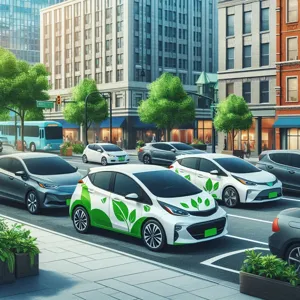
City driving creates a unique mechanical burden. Unlike highway travel, where consistent speeds favor standard gasoline engines, urban environments force your vehicle into a continuous cycle of stopping, idling, and starting. Every time you pull away from a red light, your engine must overcome the car’s entire curb weight from a dead stop. This requires significant torque, which is where traditional vehicles struggle and modern electrified powertrains excel.

Think of your car in stop-and-go traffic like a heavy shopping cart. Once you get it moving, it stays moving easily. But pushing that cart from a standstill every few meters requires a massive burst of energy. High-efficiency city cars are designed to provide that initial shove using electricity, saving your primary fuel source for steady-state cruising.
Technical Metrics That Actually Impact Your Commute
Most buyers fixate on EPA city MPG ratings, but these numbers are laboratory estimates. To find a true urban performer, look at these three technical pillars that define real-world savings.
- Regenerative Braking Efficiency: This system acts like a water turbine. When you lift your foot off the gas, the motor reverses to act as a generator, recharging your battery while slowing the car. Look for systems that allow multiple intensity levels so you can tailor the deceleration to your driving style.
- Low-End Torque Availability: Electric motors reach peak torque at zero RPM. This means you do not need to rev the engine to move quickly through an intersection. Instant torque allows for smoother, more efficient acceleration compared to internal combustion engines that must reach higher revs to find their power.
- Thermal Management of Batteries: In stop-and-go traffic, energy is often lost as heat. Vehicles equipped with active battery cooling systems maintain the battery within an ideal temperature range. This prevents the degradation of capacity that occurs when a battery runs too hot during short, high-energy bursts.
Comparative Analysis: Hybrid vs. Plug-in vs. Full EV
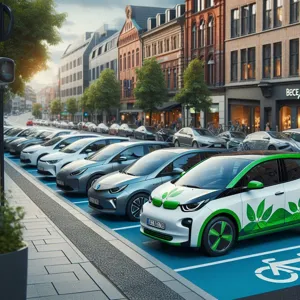
Choosing the best vehicle depends on your specific urban usage. Here is how these platforms compare in a dense city environment.
- Standard Hybrids (HEV): These are best for drivers without home charging. The Toyota Prius remains a benchmark because of its highly optimized planetary gear set, which manages the power split between gas and electric motors with minimal friction losses.
- Plug-in Hybrids (PHEV): Ideal if your commute is under 30 miles. You can operate in full-electric mode for your entire trip, essentially turning your car into an EV for the day. If the battery depletes, the gas engine takes over, removing range anxiety.
- Battery Electric Vehicles (BEV): The ultimate city choice. With no idling fuel consumption and minimal moving parts, the maintenance cost over 60 months is significantly lower. The Hyundai Ioniq 6, for instance, uses an 800-volt architecture that maximizes charging speed and overall electrical efficiency.
Avoiding the Common Efficiency Traps
Even the most efficient car will fail if operated incorrectly. Here are the most common technical mistakes that kill your city mileage.
- The ‘Jackrabbit’ Acceleration: Rapidly stomping on the accelerator forces the computer to engage the gasoline engine to meet power demands. Use the ‘eco-meter’ in your dashboard to keep the needle within the electric-only range for as long as possible.
- Ignoring Rolling Resistance: Tires are the only contact point between your car and the road. Under-inflated tires increase rolling resistance, which acts like a constant drag. Check your tire pressure every two weeks; a 5 PSI drop can reduce your total efficiency by nearly 3%.
- Misusing Climate Control: Heating the cabin consumes vast amounts of energy in older EVs. Prioritize vehicles with heat pump technology, which uses ambient heat to warm the interior rather than relying on an electrical resistance heater that drains the battery.
Field Experience: The Reality of Total Cost of Ownership
Do not let a lower sticker price fool you. A vehicle that costs $3,000 more upfront but saves $1,000 per year in fuel and brake maintenance is the superior financial decision. Because regenerative braking handles the bulk of deceleration, you will likely find that your brake pads last twice as long as they would on a standard sedan. This is a hidden benefit that significantly lowers your cost-per-mile.
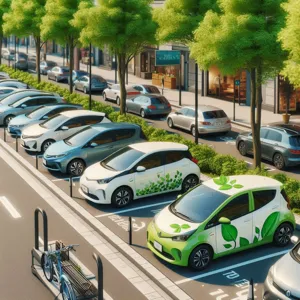
Finally, consider the physical size of your vehicle. In a crowded city, the most efficient car is one that spends the least amount of time idling while searching for parking. A compact footprint combined with a tight turning radius allows you to park faster and safer. Efficiency is not just about the engine; it is about minimizing the total time and energy spent on the road each day.
Contenu mis a jour le 2026-08-23