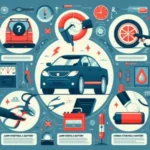
Mastering Your Pre-Trip Vehicle Inspection

Preparation is the difference between a smooth road trip and a costly breakdown on the shoulder of a highway. You should treat your car like a precision machine that requires calibration before high-stress operation. Performing a deep-dive technical check one week before departure provides a buffer to resolve hidden issues without rushing.
The Core Mechanical Health Audit
Do not rely on your dashboard warning lights to tell you something is wrong. Modern sensors often trigger too late to prevent damage. You need to verify these four vital systems manually.
Tire Integrity and Road Contact
Tires are your only contact patch with the road. Use a digital tire pressure gauge to check levels while the tires are cold. Compare the reading to the PSI specification found on the sticker inside your driver-side door jamb. Never use the maximum PSI number printed on the tire sidewall, as that is the pressure limit for the tire itself, not your specific vehicle.

Check your tread depth using a tread depth gauge. You need at least 4/32 of an inch for wet weather safety. If your tires show uneven wear patterns, such as the inside edge being more worn than the outside, your suspension alignment is compromised. You will need a professional alignment to prevent uneven tire degradation on your trip.
Fluid Dynamics and Thermal Regulation
Engine fluids are the blood and cooling system of your vehicle. Inspect your oil level on a flat surface after the engine has cooled. If the oil is dark, gritty, or smells like burnt fuel, perform an oil change immediately. Fresh oil maintains the viscosity needed to lubricate internal components under constant heat stress.
Check your coolant reservoir. If the fluid level is consistently low, you have a leak in the cooling system or a failing water pump. Do not use tap water to top it off, as the minerals can cause internal corrosion. Use the specific coolant type recommended in your owner’s manual.
Electrical System Reliability

A battery failure is the most common cause of non-starting vehicles. If your battery is over three years old, have a shop perform a load test. This test simulates the energy draw of a cold start. Look for white, fuzzy deposits on the terminals, which indicate acid corrosion. Clean these with a baking soda and water solution to ensure a clean electrical path.
Braking System Performance
Your brakes work via friction. If you hear a high-pitched squeal, the built-in wear indicator on your brake pads is scraping the rotor to warn you. If you hear a grinding noise, you have already damaged the rotors, and the vehicle is unsafe for high-speed driving. Inspect the brake fluid reservoir; if the fluid is dark brown or black, it has absorbed moisture and needs to be flushed.
Visibility, Safety, and Emergency Readiness
High-speed driving demands perfect vision. A dirty or malfunctioning lighting system is a major hazard during dusk or inclement weather.
- Lighting array: Have a partner stand outside while you test brake lights, turn signals, and reverse lights. A single burnt-out bulb can earn you a ticket or lead to a collision.
- Wiper efficacy: If your blades chatter across the glass or skip sections, replace the rubber inserts. Fill the reservoir with a winter-grade washer fluid to help dissolve bug splatter and road grime efficiently.
- The emergency logic: Pack a kit that actually solves problems. Include a jump starter pack, a high-lumen LED flashlight, a tire puncture repair kit, and a portable air compressor that plugs into your 12V outlet.
Professional Maintenance vs. DIY

Distinguish between maintenance and repair. Checking fluids is maintenance. Diagnosing a high-speed steering vibration is a repair task. A steering wheel vibration often indicates that your wheels are out of balance, acting like a lopsided laundry machine. Have a technician perform a road-force balance on your wheels to ensure a smooth highway experience.
Classic Errors to Avoid
- Ignoring the spare tire: Most drivers check four tires and forget the fifth. A flat spare is useless when you are stuck. Inflate your spare to 5 PSI above the recommended pressure.
- Overloading beyond limits: Check the Gross Vehicle Weight Rating in your manual. Adding 200 pounds of luggage increases your stopping distance and puts significant strain on your transmission fluid cooler.
- Missing documentation: Keep physical copies of your registration and insurance in the car. Digital documents do not help if your phone battery dies or if you have no cellular signal.
Optimizing Your Long-Distance Comfort
Physical fatigue leads to mental lapses. If you are physically uncomfortable, your reaction times drop significantly. Adjust your seat so your wrists can rest on the top of the steering wheel with your shoulders against the seat back. This ensures you can steer through emergency maneuvers without reaching or overextending.
Download your entire route via offline maps in your navigation app. Relying on cellular data for navigation is a mistake in remote areas. Finally, curate your audio entertainment before you set off. Fiddling with a touchscreen to find a podcast while moving at 70 mph is a high-risk behavior that negates all your mechanical preparation.
Content updated on 2026-08-25