The most expensive cars in the world fall into two very different groups: new cars built in tiny numbers for a handful of clients, and historic cars that change hands at auction. Both reach prices that have little to do with how well they drive.
Coachbuilt one-offs
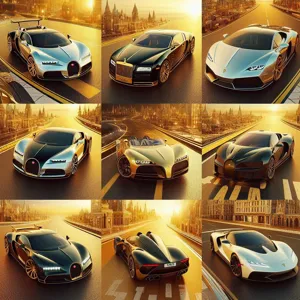
At the very top of new-car prices are bespoke commissions. Rolls-Royce revived the tradition of coachbuilding with the Boat Tail, a car made in only three examples and widely reported to cost around $28 million each, followed by later one-off projects. Bugatti’s La Voiture Noire, a single car inspired by the Type 57 SC Atlantic, was reported at about $18 million. These prices are rarely confirmed officially; figures come from press reports and should be read as estimates.
Limited-production hypercars
Below the one-offs come hypercars built in runs of a few dozen to a few hundred. Bugatti’s Chiron derivatives, the Divo and the Centodieci each sold for several million dollars, and its successor, the Tourbillon, follows the same path. Pagani’s handmade cars (Zonda and Huayra specials, the Utopia) are famous for their craftsmanship, and Koenigsegg, Rimac and Aston Martin’s Valkyrie push performance and engineering to extremes.
What drives the price is rarity, carbon-fiber construction, extreme engines or electric drivetrains, and the guarantee that very few other people will own the same car.
Classic cars at auction
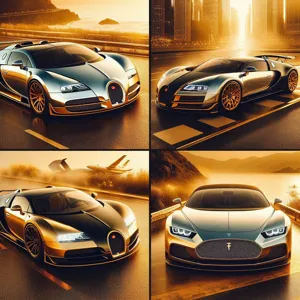
The highest prices of all are paid for historic cars. In 2022, a 1955 Mercedes-Benz 300 SLR Uhlenhaut Coupé, one of only two built, sold for about €135 million (around $143 million) in a private auction organized by RM Sotheby’s, the highest price ever paid publicly for a car. Ferrari 250 GTOs, built in only 36 examples in the early 1960s, regularly sell for tens of millions; one went for over $48 million at auction in 2018 and another set a new public-auction record for Ferrari in 2023.
For these cars, history matters as much as the machine: racing results, famous drivers and unbroken documentation can double the value.
Why it matters to ordinary drivers
Hypercars often test technology that later reaches everyday cars: carbon-ceramic brakes, hybrid systems, active aerodynamics and lightweight materials. Many current safety and efficiency features started at the top of the market.
For cars you might actually drive every day, see our guides to the best luxury cars, the most stylish cars and cars for sporty driving.