Mastering Winter Roads: A Pragmatic Approach to Safety
Credit : whatcanu.com
Winter driving isn’t about being fearless; it’s about being prepared. When temperatures drop, the physics of your vehicle change entirely. Traction decreases, stopping distances triple, and your car’s mechanical systems face increased stress. You must shift from a ‘summer driving mindset’—where you rely on automatic reactions—to a ‘proactive pilot mindset’ where you constantly analyze the surface beneath you.
Why Your Winter Tire Choice is a Non-Negotiable Investment
Think of your tires as the only bridge between your vehicle and the road. Standard all-season tires are designed for temperate conditions. Once the thermometer hits 7°C (45°F), the rubber compound in all-season tires hardens, losing its grip like a plastic heel on ice. Dedicated winter tires use a softer silica-based compound that stays flexible in freezing temperatures, allowing the tread to bite into the snow.
Tread Depth Matters: Winter tires lose significant performance once tread depth drops below 4mm. Don’t wait for the legal limit; replace them early.
The Pressure Rule: Cold air contracts. Check your tire pressure weekly during winter, as under-inflated tires have weaker sidewalls and uneven contact patches.
Braking Physics: Using winter tires can reduce your stopping distance by up to 30% on packed snow. That is often the gap between a safe stop and a collision.
Optimizing Your Vehicle’s Vital Signs
Credit : whatcanu.com
Cold weather is the ultimate test for your engine and electronics. Before the first freeze, perform these checks to ensure your machine doesn’t let you down in the middle of a storm.
The Battery Load Test: A battery’s cold-cranking capacity drops by roughly 30% at 0°C. If your battery is more than three years old, have a shop test its voltage under load.
Fluid Viscosity: Use a winter-grade synthetic oil that flows easily at low temperatures. A thick oil acts like glue in your engine, causing massive strain during cold starts.
Visibility Fluids: Standard washer fluid will freeze on your windshield at high speeds. Switch to a de-icing washer fluid rated for at least -20°C.
Defensive Driving Techniques for Icy Conditions
Driving on snow is all about smoothness. Any sudden movement—jerking the wheel, slamming the brakes, or punching the gas—breaks the fragile grip your tires have on the road.
The Six-Second Gap: In dry weather, three seconds is fine. In winter, double it. If you see brake lights ahead, you need maximum distance to decelerate gently.
Threshold Braking: Modern ABS (Anti-lock Braking System) helps, but you shouldn’t rely on it. Aim to finish your braking before you start turning into a corner.
Manual Gear Control: If you drive an automatic, use the manual shift mode to hold a higher gear on slippery inclines. This prevents wheel spin by reducing torque to the wheels.
Handling the Worst-Case Scenario: Managing a Skid
Credit : whatcanu.com
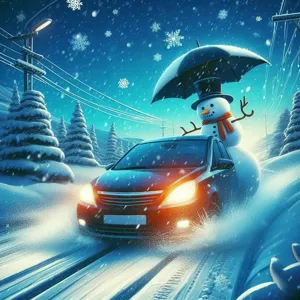
If you lose control, your brain’s instinct will be to stomp the brakes. Do the exact opposite. If you brake during a skid, you lock the wheels, turning your car into a sled with zero steering capability.
Look Where You Want to Go: Your hands naturally follow your eyes. If you stare at the ditch, you will end up in it. Focus on the lane you want to occupy.
Steer Into the Slide: Turn your front wheels in the direction the rear of your car is sliding. If your tail is swinging right, turn right.
Gentle Throttle Recovery: Once you feel the front wheels regain grip, gently apply power to stabilize the vehicle.
The Reality of Black Ice
Black ice is transparent, not black. It forms as a thin, invisible glaze on bridges, overpasses, and shaded areas. If the road ahead looks ‘shiny’ or ‘wet’ but the temperature is below freezing, treat it as ice. Do not change speed or direction. Maintain a steady pace, keep the wheel straight, and wait until you have crossed the surface before attempting any maneuvers.
Why You Need a Real Emergency Kit
Credit : whatcanu.com
Never rely on your phone as your only safety tool. Batteries die, and signal towers fail in deep snow. Your car should hold a dedicated kit that keeps you warm for at least 12 hours.
Insulation: Keep two heavy wool blankets, not just thin fleece.
Extraction Tools: A compact metal shovel and a bag of grit or sand for tire traction.
Lighting: A headlamp is superior to a flashlight because it keeps your hands free to change a tire or clear snow.
Energy: High-calorie, non-perishable snacks like protein bars.
The Pragmatic Call: When to Stay Home
There is no medal for driving in a blizzard. If the local authorities issue a ‘do not travel’ warning, listen to it. Most accidents happen not because of road conditions, but because of human overconfidence. If you feel hesitant or stressed before even starting the engine, your reaction times are likely already compromised by anxiety. Stay home, save your vehicle from damage, and prioritize your safety over your schedule.
Summary: Your Winter Checklist
Verify winter tire tread depth and air pressure.
Have the battery tested for cold-start capacity.
Stock the trunk with a shovel, blanket, and high-energy snacks.
Adopt a six-second following distance rule.
Practice gentle, smooth steering and throttle inputs.