Basketball offense is a game of space and mathematics. You are not just trying to score; you are trying to force the defense into a choice where every option leads to a disadvantage. To move beyond streetball and into organized competitive play, you must understand how different offensive structures manipulate the floor.
The Motion Offense: The Art of Constant Read-and-React
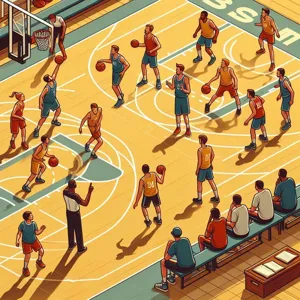
The motion offense is based on fluid movement rather than rigid patterns. Imagine a bicycle chain; when one link pulls, the entire system responds. Players must read the defense and react instantly to fill open spots.
Spacing: Keep a 15-foot gap between teammates. This forces defenders to cover more ground and prevents one defender from guarding two people at once.
Relocation: If a teammate drives to the rim, you must vacate that area immediately. By moving to the corner or the wing, you provide a passing outlet.
The Backdoor Cut: When your defender turns their head to look at the ball, sprint sharply toward the basket. This is the most efficient way to score a layup against aggressive, over-playing defenders.
The Pick and Roll: Exploiting the Mismatch
Credit : whatcanu.com
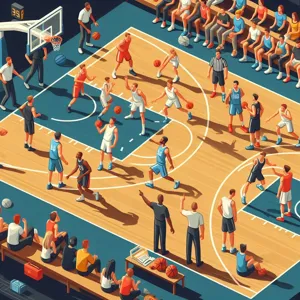
The pick and roll is the most effective weapon in modern basketball. It forces two defenders to focus on one ball handler, creating a temporary numerical advantage for your team. Think of it like a diversion in a magic trick: you draw the focus to the ball while the screen setter slips behind the defense.
Field Experience Note: A common amateur error is setting the screen while running. If you are moving when contact occurs, the referee will call an illegal screen. Wait for your defender to set their feet, then plant your own feet firmly to provide a solid wall. A stationary screen is nearly impossible to defend legally.
Isolation and Set Plays
Isolation sets are useful when you possess a significant physical advantage against a specific defender. However, do not lean on this; it drains the clock and tires your best player. The Triangle Offense, by contrast, uses three players to form a geometric shape on one side of the court. This spacing gives the ball handler three immediate passing options—the post, the wing, or the corner—making it nearly impossible for a zone defense to maintain its integrity.
Defensive Architectures: Controlling the Tempo
Credit : whatcanu.com
Defense is not just about stopping shots; it is about forcing the offense to play in areas where they are uncomfortable. You must dictate the geography of the game.
Man-to-Man Defense: The Principle of Accountability
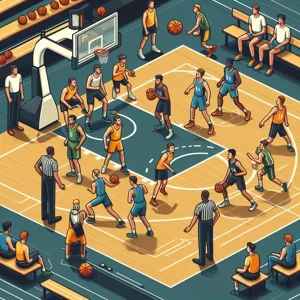
In man-to-man coverage, your primary objective is to stay between your assignment and the basket. Maintain a low stance with knees bent and your weight on the balls of your feet. Treat your defender like a mirror: if they move left, you slide left. If you are beaten off the dribble, do not panic. Rely on help-side defense, where a teammate slides over to plug the lane while you recover your position.
Zone Defenses: Shrinking the Court
Zone defenses like the 2-3 or 3-2 are designed to protect the paint and force low-percentage outside shots. Think of your zone as a spider web. The ball is the fly trapped within it. As the ball rotates, the entire web must shift toward the perimeter to deny open looks.
2-3 Zone: This is best for teams with limited outside shooting capability. It forces the opponent to settle for contested three-point shots.
3-2 Zone: Use this to disrupt teams that rely on high-volume perimeter passing. It puts more pressure on the top of the key.
Box-and-One: This is a hybrid tactic used against a superstar. Four defenders hold a 2-2 zone, while the fifth defender shadows the opponent’s best player everywhere they go.
Professional Adjustments and Game Management
Credit : whatcanu.com
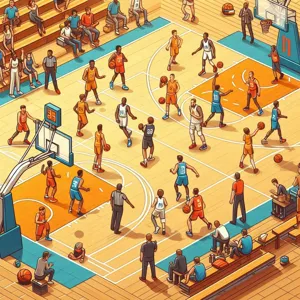
The difference between a good team and a great team is the ability to adjust mid-game. If an opponent is scoring easily on pick-and-rolls, you must switch your defensive coverage. Try a hedge: the screen-defender steps out aggressively to intercept the ball handler’s path. This buys the original defender two seconds to recover and close the gap.
Handling Pressure: Avoiding the Corner Trap
When facing a full-court press, the most frequent error is dribbling into the corners. The sideline acts as a second defender, trapping you in a dead zone. Instead, use the middle of the floor to split the trap. Use pivot moves to create new passing angles, and keep your head up to find the teammate who is inevitably left unguarded when the defense commits two men to you.
Building Cohesion Through Communication
Basketball is a high-speed game that requires constant verbal feedback. You must call out screens, warn teammates about cutters, and signal defensive switches. If you remain silent, you are inviting breakdowns. Build a habit of constant communication in practice until it becomes muscle memory. When you and your teammates move in unison, you force the opponent to work twice as hard for every single point.