Many players feel the backhand is their weak side and spend matches trying to hide it. Opponents notice quickly. A reliable backhand, even if it is not a winner-hitting weapon, changes how you play: you no longer need to run around every ball.

One hand or two?
The two-handed backhand is easier to learn for most players. The second hand adds stability and strength, which helps on high balls and returns of fast serves. It needs good footwork, because your reach is shorter.
The one-handed backhand gives more reach and a natural transition to slice and volleys, but it requires more strength and precise timing, and high balls are harder to handle. It is rarer in modern professional tennis but still effective. Pick the one that feels more natural and stick with it.
Preparation is everything
Late preparation is the most common backhand fault. Turn your shoulders as soon as you read the ball, so your back partly faces the net. For a two-hander, both hands take the racquet back together; for a one-hander, the non-hitting hand supports the throat of the racquet during the turn and releases it as you swing.
The topspin drive
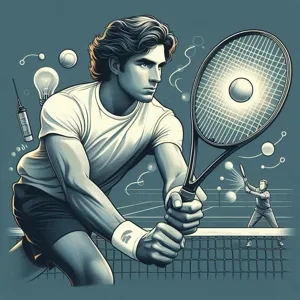
Step into the ball with your front foot when you have time, or hit from an open stance on wide balls. Drop the racquet below the ball and swing low to high, making contact in front of your front foot (further in front for a one-hander). Keep your head still at contact. On a two-hander, the non-dominant hand does much of the work, almost like a left-handed forehand for a right-handed player.
The slice backhand
The slice is one of the most useful shots in tennis: for defense on wide balls, for changing the rhythm of a rally, for approaching the net and for low, skidding balls on grass and fast courts. Use a continental grip, take the racquet back above the height of the ball, and swing down and forward through contact with an open racquet face, keeping the wrist firm. Think of carving under the ball while moving forward, not chopping straight down. A good slice stays low after the bounce.
Two-handed players can and should learn a one-handed slice; it is a basic defensive tool.
Backhand practice
- crosscourt backhand rallies, starting slowly and increasing pace;
- alternating topspin and slice backhands from the same feed;
- slice approach shots followed by a volley;
- a “backhand only” practice game, played to the singles court.
If the backhand breaks down under pressure, footwork is usually to blame rather than the stroke; our article on tennis footwork helps. And for the right grip on each shot, see the different tennis grips.