How Does Cinema Reflect the Changing World?
Think of cinema as a high-fidelity mirror reflecting our global society. It acts like a real-time diagnostic tool for our collective values, economic fears, and political shifts. You are not just consuming entertainment; you are observing a data set of where civilization stands today.
The Economic Engine Behind the Screen
Film production operates on cold financial logic. Studios invest millions into stories they believe will resonate with the current public psyche. When you see a sudden rise in survival movies like A Quiet Place or The Last of Us adaptation, it is an economic reaction to perceived systemic instability.
Data proves a clear link between macroeconomic indicators and genre trends. During financial contraction, box office data shows a surge in escapist blockbusters. In contrast, periods of relative stability often lead to character-driven dramas that question identity. Think of your movie ticket as a micro-investment in the reality you want to see reflected.
The Risk of Misreading Data
A common mistake is assuming every movie is a deliberate political manifesto. Often, it is simpler: it is an attempt to capture your attention based on current anxieties. If a film feels disconnected, that void is the data point. It highlights a gap between industry assumptions and your lived experience.
Decoding Social Shifts Through Recent Narratives
Cinema functions as a laboratory for social change. It shrinks complex societal debates into manageable narratives, accelerating the mainstream adoption of new ideas.
- Vernacular Evolution: Listen to the dialogue in films like Everything Everywhere All At Once. It demonstrates how niche internet vernacular moves into daily office conversation.
- The Ethical Stress Test: Movies act as safe environments to rehearse moral dilemmas. When you watch characters navigate corporate scandals in films like The Dropout, you are auditing your own ethical boundaries.
- Visual Palettes: Look at the shift in color grading. The transition from the high-saturation films of the 90s to the desaturated, cold tones seen in The Batman or Joker reflects a measurable decline in public optimism.
The Shift from Gatekeepers to Creators
The traditional studio system used to control this mirror entirely. Today, digital democratization has dismantled that top-down approach. You no longer rely on five major studios to dictate what constitutes a culturally relevant story. Independent creators now challenge dominant narratives.
This shift means the mirror is finally showing the entire room instead of just the front row. Diverse perspectives that were once filtered out by risk-averse executives now drive market trends. If a project lacks authentic representation, it often fails because modern audiences reject sanitized versions of reality.
How to Become an Active Observer
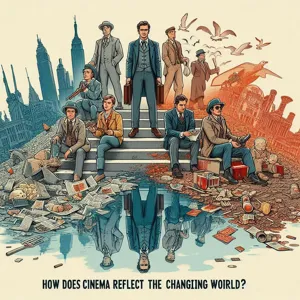
Stop watching films as a passive consumer. You can turn your viewing experience into a sharp analytical exercise by applying these three practical methods:
- The Three-Year Comparative Audit: Compare a social issue film with one from three years ago. For example, look at how the climate crisis is portrayed in 2021 disaster films versus 2024 activist documentaries. The change in resolution reveals the speed at which social norms evolve.
- The Financial Context Check: Spend sixty seconds identifying the funding source. A film backed by a major streamer carries different priorities than an independent feature funded through equity crowdfunding like Seed&Spark.
- The Agency Analysis: Ask yourself how the protagonist achieves their goal. Do they succeed through systemic collaboration or individual rebellion? This answer tells you what the filmmakers believe is the most effective way to influence the real world.
The Feedback Loop of Your Choices
You are an active participant in this cultural cycle. Every time you support an independent production over a predictable franchise, you send a direct signal to the market. You are casting a vote for the type of mirror you want to see.
Do not waste this influence on low-effort content. Keep looking for the underlying tensions and patterns behind the plot. Cinema is a map of the world as it changes, provided you know how to read the symbols. Look past the CGI and identify the real-world symptoms being projected on the screen.
Content updated on 2026-10-03