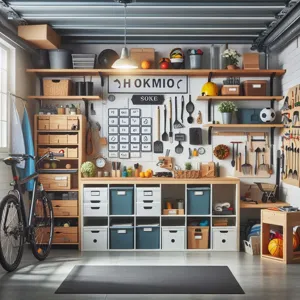
Stop thinking about your garage as a generic junk drawer. You need to treat it as a high-performance space. Before buying a single bin, map your garage like a warehouse manager would map a fulfillment center. Identify the zones of high traffic—the area near the door—versus the dead zones in the corners.
Take a tape measure and determine the exact depth and width of your walls. Most people fail because they buy storage solutions that are too deep, obstructing the path for their vehicle. If you have 24 inches of clearance from your car mirror to the wall, that is your hard limit for depth. Respect it.
The Golden Rule of Vertical Storage
Floor space is a luxury you do not have. Every square inch of the floor is a liability. Your strategy should prioritize the walls and the ceiling. Think of your garage walls as a modular grid.
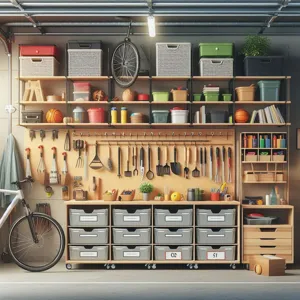
Steel Slatwall Panels: These are superior to pegboards. They handle heavy loads without bowing and allow you to reposition hooks as your inventory changes.
Ceiling Racks: Install industrial-grade overhead racks for items used once a year, like camping gear or holiday decor.
The 6-Foot Threshold: Keep everything you use weekly below eye level. Everything you use monthly goes on the shelf above that. Yearly items go near the ceiling.
Professional-Grade Categorization
Credit : whatcanu.com
Stop sorting by “type” and start sorting by “frequency of use.” This is the difference between a clean garage and an efficient one. A common error is placing lawn care items next to automotive tools just because they are both heavy.
Create specific “kitting” stations. For example, if you perform oil changes, create an “Automotive Kit” containing the jack, wrench, oil filter, and drain pan. Store these as a single unit on a rolling cart. When you are ready to work, you wheel the entire station to the car. This eliminates 15 minutes of searching for tools scattered across three different shelves.
Selecting Hardware That Lasts
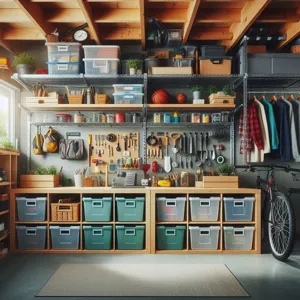
A garage is an extreme environment, subject to temperature swings and humidity. Cheap plastic bins become brittle and crack within two years. Invest in heavy-duty, industrial-grade polypropylene bins or welded steel cabinets. Avoid pressboard or particleboard at all costs; they will swell and crumble if they get damp.
The Mechanical Fastener Test
Credit : whatcanu.com
When installing wall tracks or shelving, always screw into the structural studs. Use a stud finder to mark your vertical supports. If you try to anchor shelving into simple drywall, you are setting yourself up for a catastrophic collapse. Use 3-inch deck screws for maximum bite into the wood.
Managing the “Death Zone”
The space behind your garage door is often the most neglected area. This area is perfect for slim, shallow cabinetry or a narrow rack designed for long-handled tools like rakes and shovels. By using this overlooked space, you prevent those long items from leaning against walls and falling over constantly.
Systems for Long-Term Maintenance
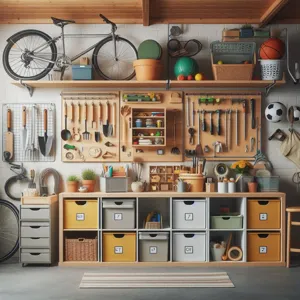
You will lose your progress within 90 days if you do not have a reset ritual. Treat your garage like a professional workshop. Every Saturday afternoon, perform a 10-minute reset. Put tools back in their specific foam-cutout spots or designated bins. If a tool does not have a home, create one immediately. Never leave a tool on the workbench overnight.
Credit : whatcanu.com
Implement a strict “In-Flow” policy. For every new item you store in the garage, one item must be discarded or donated. If your storage capacity is at 100%, you are not allowed to buy more gear. This self-regulating system forces you to curate your possessions rather than hoard them.
Lighting and Safety Enhancements
You cannot organize what you cannot see. Standard single-bulb ceiling lights create shadows in the corners, which turn into catch-alls for clutter. Install LED shop lights—specifically 4000K to 5000K daylight bulbs—in rows perpendicular to your main storage walls. Clear lighting forces you to be honest with yourself about whether a space is actually clean.
Avoid These Classic Errors
Storing Liquids on High Shelves: Always store chemical containers at waist height or lower. A spill from a top shelf can ruin your floor and create a hazardous fumes trap.
Ignoring Weight Limits: Check the manufacturer’s load capacity for every shelf. Overloading is the leading cause of garage accidents.
The “Maybe” Pile: During your declutter phase, eliminate the “maybe” pile. If you have to ask yourself if you need it, you don’t.
By shifting your mindset from “storing stuff” to “managing a workspace,” you stop reacting to clutter and start controlling your environment. Use these industrial principles, maintain your reset rituals, and your garage will become the most efficient room in your home.