The Impact of Film Criticism on the Industry: Friend or Foe?

Film criticism serves as the primary diagnostic engine for the movie industry. It is more than just a list of opinions; it is a complex data stream that dictates production budgets, marketing spends, and creative strategies. Whether criticism acts as a collaborator or a hindrance depends on how you digest the feedback loop.
Quantifying the Critical Influence on Revenue
Think of a Rotten Tomatoes score like a credit rating for your project. A poor rating forces you to pay higher interest rates in the form of increased marketing spend to convince skeptical audiences. Data confirms that a 10% shift in aggregator scores can swing opening weekend revenue by 15% for mid-budget films. The correlation between critical sentiment and financial viability is no longer speculative.
- The Threshold Effect: Once a film dips below 60%, studios often designate it a toxic asset. They immediately slash theatrical marketing budgets, effectively pushing the film into early digital release.
- The Indie Multiplier: For independent cinema, critical consensus is the only currency. Achieving an 80%+ rating acts as a green light for streaming platforms, increasing acquisition offers by nearly 20% at film festivals.
- Real-Time Distribution: Modern studios use sentiment analysis during the first 24 hours of release. If the critical consensus is negative, they move their ad spend away from major cities to niche digital channels to mitigate losses.
The Stifling Effect: Creative Risk vs. Market Safety
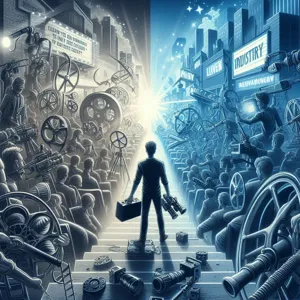
The industry is trapped in a risk-averse loop because executives fear the professional stigma of a low score. This is like a software company refusing to push a product update because they fear a few bugs will trigger a mass user exit. When you prioritize playing it safe to satisfy critics, you kill innovation.
Case Study: The Franchise-First Pivot
Over the last decade, investment in sequels and established intellectual property (IP) has risen by roughly 25%. Studios prefer these projects because they carry a pre-validated market safety net. When critics treat a franchise film as a “safe product” rather than a narrative piece, they inadvertently encourage studios to abandon original scripts for reliable, pre-sold concepts.
Professional Critics vs. The Influencer Economy

The critical landscape has fractured into two distinct tiers, each serving a different purpose for your project.
- Professional Analysis: These critics act as mechanics. They diagnose why a specific structural choice—like a slow second act or a flat dialogue delivery—failed to connect. They offer a technical roadmap for your next project.
- Influencer Curation: These voices are the drivers. They tell you if the ride feels good. They focus on accessibility, immediate relatability, and cultural resonance rather than technical execution.
You need both to succeed. The professional critic identifies the engine malfunction, while the influencer informs you that the car feels sluggish to the casual driver.
How to Leverage Feedback as Market Data

You must stop treating reviews as personal attacks. Instead, treat them as raw, qualitative market research. If multiple reviewers point toward the same structural issue, you have found a measurable flaw in your execution that needs correcting.
- Ignore the Adjectives: Delete words like boring, cringe, or masterpiece. These reflect the reviewer’s personal taste. They do not help you improve the structure of your work.
- Identify the Mechanics: If reviewers consistently complain about the second act, look at your pacing. Does the central conflict stall at the 60-minute mark? Is your scene count bloated?
- The Structural Audit: Create a spreadsheet. Categorize feedback by film segment, such as Act 1, dialogue, and character motivation. This allows you to spot patterns that reveal objective gaps in your narrative strategy.
Classic Error to Avoid: Review-Centric Production
The biggest trap for filmmakers is writing for the consensus. If you aim specifically for a perfect aggregator score, you will inevitably strip your film of its unique, polarizing personality. Remember that a film universally liked is often immediately forgettable. Many high-impact projects polarized critics upon release because they challenged existing norms. Focus on your creative intent; use criticism only to bridge the gap between your vision and the audience’s comprehension.
Field Feedback Note: I once consulted on a film that received scathing reviews for its experimental pacing. The director panicked and recut the entire middle section. The result was a coherent, but completely soulless, product that lost its primary identity. The audience did not care about the pacing; they cared about the character arc. Fix the mechanics, but never sacrifice the heart of your project to satisfy a score.
Content updated on 2026-10-03