
PC gaming – What are the best budget gaming PCs in 2024?

Building or buying a budget gaming PC in 2024 requires a shift in mindset. You should ignore marketing fluff like flashy LED lights and focus strictly on price-to-performance ratios. A solid entry-level system should cost between $800 and $1,100. Spending less often leads to proprietary parts that are impossible to upgrade, while spending more usually lands you in mid-range territory.
The Hardware Sweet Spot: Precision over Power
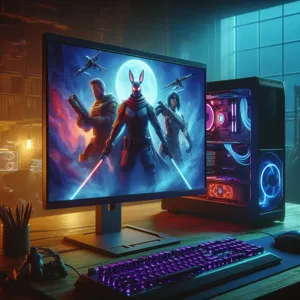
To avoid overpaying, focus your budget on the components that generate frames. Think of your PC like a professional kitchen: the GPU is your chef, and the CPU is the sous-chef. If the chef is slow, it doesn’t matter how fast the sous-chef prepares ingredients.
- GPU (The Priority): Aim for the NVIDIA RTX 4060 ($299) or the AMD Radeon RX 7600 ($269). These cards handle 1080p gaming at ultra settings easily. They support frame generation technologies, which act like a turbo-boost for your framerate in modern titles.
- CPU (The Engine): The Intel Core i5-13400F ($200) or AMD Ryzen 5 7600 ($199) are the current industry standards. Avoid older i7 or i9 chips; they consume too much power and generate excessive heat without offering better gaming performance.
- RAM (Memory Management): 16GB of DDR5-5600MHz is the floor. If RAM is a desk, then 16GB allows you to have a game, Discord, and Chrome tabs open without your system forcing you to close tasks.
- Storage: A 1TB NVMe M.2 SSD is non-negotiable. It is like replacing a filing cabinet with a digital search engine; your loading times in games will drop from minutes to seconds.
Top 3 Value-Driven Pre-Built Picks

If you prefer a pre-built machine, you want systems that use standardized parts. Proprietary motherboards are a trap because they prevent you from swapping parts later.
- CyberPowerPC Gamer Xtreme: Usually priced around $950. These are excellent because they use standard ATX motherboards and power supplies. You can swap the case or GPU in three years without needing a new PC.
- HP Victus 15L: Frequently on sale for $850. It is a compact, no-nonsense machine. Note that the cooling is average, so it is best for users who do not plan to overclock their hardware.
- Skytech Nebula: Often found around $1,000 with a balanced RTX 4060/i5 combo. These builds are known for better airflow than big-box retail brands, which helps the components last longer under load.
Field Report: Common Mistakes to Avoid

I have seen many gamers waste money because they ignored technical details. Do not make these errors.
- The Power Supply Trap: Never buy a PC with an unbranded 80+ White or non-rated PSU. Think of the PSU as the heart of the machine; if it fails, it can send a voltage spike that destroys your expensive GPU. Always look for 80+ Bronze or Gold labels from Tier-A manufacturers.
- The Airflow Oven: A solid glass front panel on a case is a performance killer. It prevents fans from pulling in cold air. Always choose a mesh front panel to ensure your components stay under 75 degrees Celsius.
- Legacy Hardware: Never buy a system with a GTX 16-series card. You lose access to DLSS, which is the single most important technology in gaming right now. It uses AI to upscale resolution, giving you a 30-50% frame rate increase for free.
Performance Benchmarks: What to Expect
At the 1080p resolution, your $900 build should hit 100+ FPS in competitive titles like Valorant or Overwatch 2. In demanding AAA games like Cyberpunk 2077, expect 60-70 FPS using High settings and DLSS enabled. If you move to 1440p, that performance will drop significantly, likely forcing you to use ‘Medium’ settings to maintain a smooth 60 FPS. Keep your drivers updated via the GeForce Experience or AMD Adrenalin software every month; it is a five-minute task that keeps your hardware optimized for the latest game releases.
Content updated on 2026-09-05