You have likely heard the hype: virtual reality is the inevitable successor to the traditional silver screen. However, if you look at current production data and consumer adoption rates, the reality is far more nuanced. VR is not a digital replacement for cinema, but rather a completely different medium requiring a distinct set of skills.
The Narrative Paradox: Controlling the Viewer
Traditional cinema functions because the director acts as a conductor for your attention. By manipulating focal length, lighting, and cuts, the filmmaker tells your eyes exactly where to look. In VR, this control vanishes because you grant the viewer 360-degree agency.
The Framing Dilemma: If your viewer is looking behind them during a crucial plot twist, the emotional impact is lost. Designers often attempt to force focus with jarring audio triggers or flashing lights, which ruins the natural flow of the story.
The Gaming Creep: Once you allow a viewer to choose their path, you are no longer making a movie. You are developing a video game. Think of traditional cinema as a guided train ride; VR is more akin to being dropped in a forest with a map.
Overcoming Physical and Technical Constraints
Credit : whatcanu.com
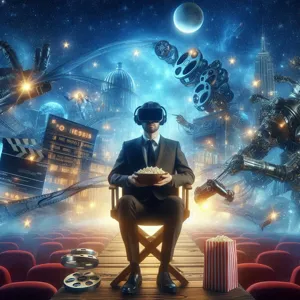
Cinema works because it is a passive, comfortable experience. You sit in a chair for two hours, eat popcorn, and relax. VR is currently a high-friction technology that demands physical effort.
The Vestibular Gap: Motion sickness occurs because your brain experiences a disconnect between what your eyes see and what your inner ear feels. Imagine sitting in a stationary car while watching a high-speed chase on a screen; your brain confuses this, leading to physical discomfort.
Hardware Fatigue: Head-mounted displays are heavy. After 30 minutes, most users report neck strain and eye fatigue. For a medium to replace cinema, it must be accessible for feature-length viewing, which current hardware simply cannot sustain.
Economic Realities of Immersive Production
Building for VR is significantly more expensive than standard 2D production. In traditional film, you frame a scene. In VR, you must build an entire 3D world that renders in real-time from every possible angle.
Credit : whatcanu.com
Error to avoid: Many creators simply mount a 360-degree camera on a tripod and hope for the best. This results in a flat, unengaging image that lacks depth. Real VR requires spatial audio, reactive lighting, and consistent high frame rates to maintain presence. If you treat VR like a static camera, the viewer will feel like a ghost observing a flat image rather than an inhabitant of the world.
Strategy for Creators: Building vs. Filming
If you are looking to enter the space, stop trying to translate traditional films into VR. Instead, treat your projects as architectural and experiential builds.
Credit : whatcanu.com
Practical tips for your workflow:
Focus on Short-form: Optimize for 10 to 15-minute experiences. This duration respects the physical comfort limits of the hardware and allows for higher technical polish without fatiguing your audience.
Empathy Over Spectacle: Use the technology to transport viewers into inaccessible locations, such as historical sites or distant landscapes. This creates a sense of presence that 2D film cannot match.
Spatial Audio is King: Sound accounts for 50% of the immersive experience. Use binaural audio so that when the user turns their head, the sound source adjusts accordingly. It is the most effective way to anchor a user in your environment.
The Future: An Additive Ecosystem
VR will not kill the 2D film experience. The industry is trending toward a hybrid model where VR acts as an extension of established franchises. Expect to see theaters offering VR installations in the lobby that allow fans to explore the film’s world before or after the screening.
Think of VR as an additional tool in your kit. If your goal is to tell a character-driven, emotionally dense narrative, use traditional cinema. If your goal is to offer a visceral, spatial experience that prioritizes exploration, choose VR. Success lies in recognizing the limitations of your medium and playing to its specific strengths rather than trying to force it into a mold where it does not fit.