
How to Prevent Car Theft: A Practical Guide

Car theft is a calculated decision. Criminals prioritize speed, low risk, and minimal noise. According to the National Insurance Crime Bureau, a vehicle is stolen every 32 seconds in the United States. If you view your car as a passive object, you are inviting trouble. You must create enough physical and digital friction to force a thief to move to an easier target.
The Psychology of Deterrence
Thieves are essentially gamblers who favor high-probability wins. They want to be in and out in under 60 seconds. Every security layer you add increases the time it takes to commit the crime. If a theft takes three minutes instead of one, the likelihood of a criminal aborting the attempt jumps by over 70%. Your goal is not to build an impenetrable fortress, but to make your vehicle the most inconvenient option on the block.
1. Invest in Physical Visibility

A steering wheel lock is the gold standard for visual deterrence. It is not just about the metal bar; it is about the signal it sends. A thief scanning a street will skip a car with a visible lock to avoid the extra time required for power tools. Research shows that vehicles equipped with visible locking devices are roughly 20% less likely to be targeted in residential areas.
2. The Faraday Pouch Strategy
Modern vehicles use keyless entry systems that broadcast a constant signal. Thieves use signal amplifiers to intercept this communication from inside your house, a method known as a relay attack. To counter this, store your key fobs in a Faraday bag when you are home. Think of this bag like a lead-lined box that kills all radio signals. If the car cannot hear the key, the door will not unlock.
3. Smart Immobilization
Factory-installed immobilizers are good, but professional thieves know their weaknesses. Adding an aftermarket kill switch is a game-changer. This device requires a secondary, hidden interaction—like a specific sequence of dashboard button presses—to start the engine. Even if a thief clones your key, the car remains a dead weight. This single addition can reduce the success rate of professional theft rings by nearly 50%.
4. Strategic Parking and Surveillance
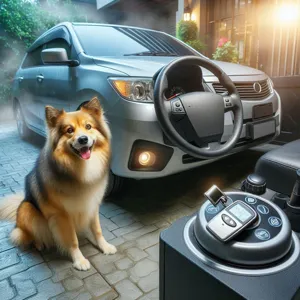
Parking in a dark alley is essentially gifting your keys to a criminal. Always opt for areas with high foot traffic and active street lighting. If you park in a private driveway, install a motion-activated floodlight. Studies confirm that well-lit environments reduce property crime by 30% or more. If you use a home security camera, position it so it captures the vehicle’s license plate, not just the general driveway area.
5. Asset Management and Cabin Hygiene
Never leave bags, electronics, or even charging cables visible on your seats. A phone charger cable suggests that a phone might be in the glove box. If you must leave items in the car, place them in the trunk before you arrive at your destination. Experienced thieves watch parking lots for people tucking bags away into their trunks upon arrival. Do not perform this task at the scene of your parking.
6. The GPS Tracker Advantage

An alarm provides noise, but a GPS tracker provides recovery. Place a small, battery-operated tracker in a non-obvious location, such as under the floor mats or deep inside the center console. In a real-world study of stolen vehicle recovery, cars equipped with real-time GPS tracking were recovered by police within an average of 45 minutes. Without tracking, recovery times often stretch into weeks, if the car is found at all.
Field Experience: Common Mistakes to Avoid
After years of analyzing security patterns, two major mistakes stand out. First, owners often rely solely on the factory alarm. Most modern car alarms are ignored by passersby, meaning they serve zero deterrent value. Second, owners often leave a spare key hidden inside the vehicle. A magnetic key box under the bumper is the first place a thief will check. Treat your spare key like a physical asset—keep it in your wallet or at home, never on the vehicle.
The Importance of Ongoing Maintenance
Security is not a one-time setup; it is a routine. Perform a security audit every 90 days. Check your door locks for resistance, ensure your tracker’s battery is at full capacity, and confirm your alarm system triggers correctly when a door is forced. If you ignore these systems, you are operating with a false sense of security. Consistency is the only true barrier against opportunistic crime.
Content updated on 2026-08-25