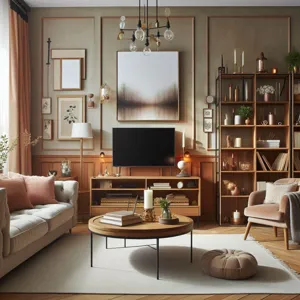
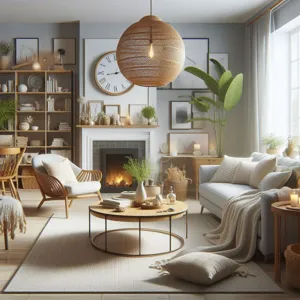
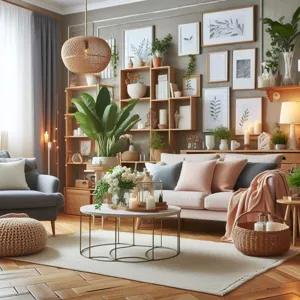
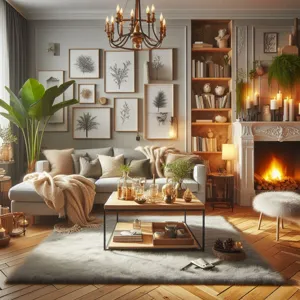
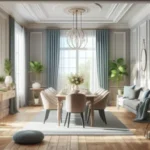
A living room is not just a place to store furniture; it is the heartbeat of your home. When you get the balance right, the space actively lowers your heart rate the moment you walk through the door. Creating this environment is not about expensive renovations. It is about mastering the technical side of sensory inputs like light, tactile contrast, and spatial flow.
The layout: Stop pushing your furniture against walls
Most homeowners make the mistake of lining every piece of furniture against the perimeter. This creates an echo chamber effect and leaves a dead, empty void in the middle of the room. Instead, pull your seating into the center to create a conversational cluster. Think of your furniture as a team that needs to work together to hold a conversation.
Define your focal point: Whether it is a fireplace, a large window, or a piece of art, point your main seating toward it.
The 8-foot rule: Keep seating pieces within 6 to 8 feet of each other. Anything further apart makes it difficult to hold a natural conversation without raising your voice.
Clear the flow: You should never have to perform an obstacle course to get from the door to the sofa. Leave at least 30 inches of space for high-traffic walkways to prevent the room from feeling cramped.
Field Note: If you feel like your room is too small for a centered layout, use a rug to create a floating island for your sofa. It defines the space as a distinct zone rather than a hallway.
Layer your lighting for immediate atmosphere
Credit : whatcanu.com
Avoid the operating room effect caused by a single, harsh ceiling light. Light is like a volume knob for your mood; you want to be able to dim it down. Use the rule of three: combine overhead, task, and ambient lighting to create depth.
Ambient lighting: Use floor lamps or wall sconces to bounce light off walls rather than shining it directly down.
Task lighting: Place a dedicated reading lamp next to your favorite armchair. This provides focused, practical light without needing to brighten the whole room.
Color temperature: Always opt for warm white bulbs, ideally around 2700K. Think of the difference between a sterile, flickering fluorescent hospital light and the soft glow of a sunset.
The technical catch: Check the lumen count. A lamp that is too bright can ruin a cozy vibe instantly. Aim for lower lumen output in lamps meant for relaxation.
Texture: The secret to visual warmth
If your room feels cold, you likely have too many smooth, hard surfaces like glass, leather, or metal. You need tactile contrast to make the room feel softer to the touch and the eye. Hard surfaces reflect sound, creating a clinical echo, while soft textures absorb it, creating intimacy.
The rug foundation: An area rug is the anchor. Ensure at least the front legs of your sofa and chairs sit on the rug to tie the pieces together.
Tactile variety: Mix your materials strategically. If your sofa is leather, add a chunky knit wool throw. If your coffee table is wood, soften the area with velvet cushions.
The layering effect: Don’t just place one throw blanket on the sofa. Drape one over the arm and stack two pillows of different sizes to create depth.
Error to avoid: Avoid ‘matchy-matchy’ furniture sets. A room feels more inviting when materials look curated over time rather than bought in a single showroom catalog.
The clutter trap: Why less is more
Credit : whatcanu.com
An inviting room is clean, but not sterile. The most common error is ‘shelf-itis’—the tendency to cover every flat surface with small trinkets. This creates visual noise, which prevents your brain from actually relaxing.
Group in odd numbers: Three objects of varying heights on a side table look intentional. Five objects scattered randomly look like a pile of laundry.
The lidded basket solution: If a surface is becoming a magnet for mail or random items, add a lidded basket nearby. It hides the mess instantly while keeping essential items within reach.
Horizontal vs Vertical: If you have limited space, stop cluttering the coffee table and start using wall shelves. Keep surfaces clear to encourage a sense of calm.
Natural elements to improve air and mood
Adding organic life to a room acts as a bridge between the indoors and outdoors. You do not need to be a botanist to succeed, but you do need to be strategic with placement.
Start low-maintenance: Plants like Snake Plants or Pothos thrive in lower light and are nearly impossible to kill.
Scale matters: One large plant in a corner is more effective than ten tiny succulents scattered on a shelf. It draws the eye upward and adds a sense of vertical scale to the room.
The pot matters: Use a basket or a ceramic pot that matches your color palette to prevent the plant from looking like an afterthought.
The five-minute test
Credit : whatcanu.com
Before you consider a room project finished, perform the ‘five-minute test.’ Sit in your room for five minutes with the lights dimmed and some soft music playing. Ask yourself: Is there a corner that feels empty? Is there a surface that feels cluttered? Is the light too harsh?
A cozy room is a work in progress. It evolves as you bring in new books, photos, or seasonal accents. Do not fear moving furniture around to test a new flow. Your home should serve your lifestyle, not the other way around. If a specific chair never gets used, move it or remove it entirely.