An ice hockey game is divided into three periods of 20 minutes of playing time each, for a total of 60 minutes. This applies in the NHL, in international (IIHF) competition including the Olympics, and in most college and professional leagues.
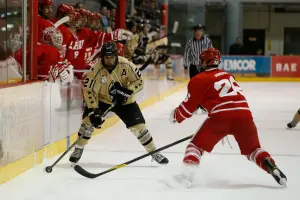
Stop time
The 20 minutes are not continuous. The clock stops whenever play stops: after goals, penalties, icing, offsides, when the puck leaves the rink or when the goaltender freezes it. That is why a 60-minute game takes much longer in real time, usually around two and a half hours in the NHL.
Intermissions
There are two intermissions, one after the first period and one after the second. In the NHL they last about 17 to 18 minutes. The ice is resurfaced during each break, players rest and coaches adjust tactics. Teams switch ends after each period.
Overtime and shootouts
If the score is tied after three periods:
- NHL regular season: a 5-minute sudden-death overtime played three-on-three. If no one scores, a shootout decides the winner, starting with three shooters per team.
- NHL playoffs: full 20-minute sudden-death overtime periods, five-on-five, continue until someone scores. Some playoff games have gone into a fourth or fifth overtime.
- International tournaments use their own overtime formats, often with a shootout in the preliminary rounds and longer overtime in medal games.
Youth and recreational hockey
Youth games often use shorter periods, such as 12 or 15 minutes, depending on age group and league, and some recreational leagues use a running clock to fit into a rink slot.
Why three periods?
Hockey once used two halves, but the change to three periods in the early 20th century gave more opportunities to resurface the ice, which is quickly cut up by skates, and more rest for players.
Field hockey is different
Field hockey, played on grass or turf, uses four 15-minute quarters in international play. Ice hockey’s three periods are a distinctive feature of the sport.
If you play sports that require short bursts of effort like hockey, see how to build stamina.