
How can you find books that offer a glimpse into the future and explore the possibilities of what could be?
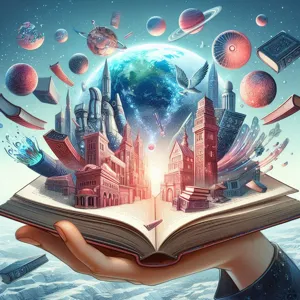
Finding literature that offers a genuine view of the future requires shifting your mindset. You must stop viewing books as entertainment and start treating them as research artifacts. Most bestseller lists prioritize plot twists over intellectual substance. To understand the possibilities of tomorrow, you need a filtering system that identifies authors who treat fiction as a social or technological simulation.
Define your foresight criteria

Before reading, decide what type of future you want to explore. Think of this like choosing a camera lens. A macro lens captures specific technological details, while a wide-angle lens observes how an entire society functions under pressure. Focus on these three specific categories to narrow your selection:
- Technological extrapolation: Prioritize authors who use current research as a baseline. For instance, if a book explores artificial intelligence, check if the author respects current neural network constraints.
- Societal modeling: Look for narratives that test human behavior. If a book ignores how economics or legal systems change alongside new technology, it is likely just a costume drama.
- Speculative theory: Choose books that function as laboratories. They take one premise—such as a world with zero-cost energy—and follow it to its logical conclusion.
Bypass algorithms for professional sources
Social media algorithms push books that trigger emotional reactions, not those that offer accurate insights. You must bypass these filters by using sources that prioritize domain expertise over popularity. Relying on organic reach is a common mistake that leads to low-quality reading lists.
- The Locus Magazine Index: This is an industry standard for speculative fiction. Use it to find titles vetted for structural integrity and idea density.
- Future Studies Journals: Organizations like the World Future Society curate lists for professional futurists. These books are written for policy makers, ensuring they are grounded in reality.
- Author Background Checks: Prioritize writers with direct experience in their subject matter. When an author consults with experts, their speculative elements carry more weight. Treat these authors as primary sources rather than just entertainers.
Apply the 50-page litmus test

You need a quick way to discard books that are all style and no substance. Apply the 50-page rule to every new purchase. If the author fails to explain the mechanics of their future within the first 50 pages, stop reading. A credible speculative author establishes the rules of their world early. If they fail to do so, they are likely using the future as a thin backdrop for a generic story.
Avoid the dystopian trap
Many readers mistake despair for foresight. A book about a wasteland is rarely a vision of the future; it is usually a commentary on current anxieties. These books often focus on the collapse rather than the functioning systems that lead to it. Prioritize authors who build complex, evolving systems rather than those who focus purely on societal destruction.
Stress-test your reading material

To extract maximum value from your books, treat your reading like an analyst would. When you select a promising title, use these three methods to ensure you are getting substantive content:
- The Acknowledgments Check: Flip to the back of the book. If the author cites journalists, scientists, or engineers, you know the speculative elements are anchored in data.
- Comparative Reading: Read two authors with opposing views on the same topic, such as urban design. This forces you to analyze the logic of their arguments rather than accepting one vision as a prophecy.
- The Prediction Fallacy: Avoid searching for books that promise accurate predictions. Future-focused literature acts as a scenario simulation. If you treat a book as a roadmap, you will be disappointed. Treat it as a map of potential possibilities instead.
Building a library that explores the future is an iterative process. Start by choosing one specific area of your life to rethink, such as energy, communication, or ethics. By curating your list with professional tools and applying the 50-page test, you will stop reading fluff and start building a rigorous mental model of what is actually possible.
Content updated on 2026-09-29