How Can We Use Film to Understand Other Cultures?

Cinema functions as a laboratory for cultural observation. Most viewers consume films for entertainment, missing the dense layers of societal blueprints hidden in every frame. To understand other cultures, you must transition from a passive spectator to an active researcher. You need a structured methodology to translate visual storytelling into actionable cultural intelligence.
Decode Social Architecture Through Narrative Details

Think of a culture as the operating system of a computer. It runs in the background, dictating how people function, prioritize, and communicate. Directors do not invent these rules; they observe and replicate them. To decode this system, focus on the mundane rather than the plot.
- Observe non-verbal hierarchies: Watch how characters address authority figures or elders. Rigid posture and silence in a film like Tokyo Story indicate a culture prioritizing collective harmony over personal ego. This is a common social lubricant in high-context societies.
- Analyze spatial dynamics: Distance is a language. In Mediterranean cultures, physical proximity signifies trust. In Northern European contexts, the same proximity can feel intrusive. Note how characters navigate personal space during tense scenes.
- Track ritualistic patterns: Pay attention to hospitality rituals. Does the host offer tea? How are guests positioned at a table? These interactions are not plot fillers. They are visual representations of how that specific culture builds trust and defines status.
Apply Data-Backed Selection Strategies
Stop relying on streaming algorithms that prioritize global mass appeal. If you want to understand a culture, you must build a curriculum that forces you to view society from multiple angles. Diversify your sources to avoid a distorted, single-lens perspective.
- The 1-2-1 Curriculum: For every international blockbuster you watch, pair it with one documentary and one independent film. The blockbuster provides the cultural ideal, the documentary provides factual context, and the independent film provides the nuanced critique of social problems.
- Triangulate with external data: If a film portrays specific social unrest, cross-reference the setting with historical records from that era. For instance, watching City of God is more effective if you simultaneously read about the favela expansion in 1970s Rio. Context prevents you from mistaking fiction for a current news report.
- Prioritize insider perspectives: A film directed by a local filmmaker offers a fundamentally different texture than an outsider’s gaze. Compare how Parasite presents South Korean class structures versus how a foreign production would depict the same issue. An insider captures nuances that others often miss.
Avoid Common Interpretative Traps
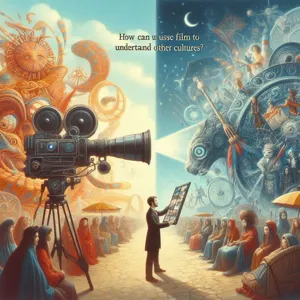
The biggest risk is the ‘tourist mindset.’ You may mistakenly view a film as a literal guidebook to a country’s entire population. Cinema is an artistic expression, not a census. Use these strategies to stay grounded in reality.
- Beware of the exoticism filter: Ask yourself who the film is designed for. If the narrative focuses exclusively on extreme poverty or radical traditions, it might be exoticizing the culture to shock a foreign audience. If it feels like a ‘spectacle,’ it is likely a distorted representation.
- Separate aesthetics from reality: High production values and stylized lighting can mask the grit of daily life. Focus on the ‘background noise’—the way people buy groceries, manage public transport, or handle petty misunderstandings. These mundane actions reveal more about reality than the high-stakes dramatic climaxes.
- Challenge your confirmation bias: We naturally search for evidence that confirms our existing stereotypes. If you believe a culture is ‘repressed,’ you will hunt for scenes of suppression while ignoring moments of laughter or agency. Consciously look for the opposite of your current assumptions.
Practical Exercises for Active Viewing
Turn your next movie night into a rigorous research session. Passive viewing builds only surface-level impressions, whereas active analysis builds cross-cultural empathy and deep understanding.
- The 10-Minute Context Scan: Before pressing play, research the specific political or economic climate of the country when the film was produced. Understanding the censorship laws in Iran during the 90s, for example, helps you read the subtext of films by Abbas Kiarostami.
- The Interaction Log: Keep a notebook nearby. Record three social interactions that felt counter-intuitive or surprising to you. Did they solve a conflict with a joke instead of a direct confrontation? Write it down and compare it to how you would react in your own cultural context.
- Debate to Refine Understanding: Articulate your findings out loud. Discuss the film’s central moral dilemma with another person. If you watched a film centered on personal honor versus legal justice, discuss why those two concepts might clash differently in that culture compared to your own.
By treating cinema as a systematic study, you sharpen your ability to navigate global complexities. You are no longer just watching a story. You are learning the mechanics of human behavior in a different environment, which is the cornerstone of true cross-cultural intelligence.
Content updated on 2026-10-03