Which position is always staffed in ICS applications
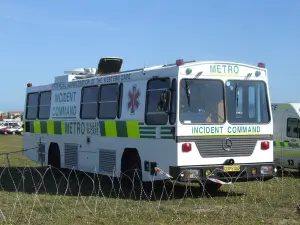
In any emergency response scenario, the Incident Command System (ICS) serves as your foundational blueprint. If you are managing an incident, you might feel pressured to activate a full organizational chart immediately. However, the Incident Command System standard, as defined by FEMA (Federal Emergency Management Agency), dictates a modular, scalable approach. The only position that is always staffed in every ICS application is the Incident Commander (IC).
Think of the Incident Commander as the conductor of an orchestra. Even if the music only requires one instrument, someone must hold the baton to maintain rhythm and tempo. Without an IC, your response efforts become fragmented, reactive, and dangerous. By design, ICS is meant to grow with the incident, starting from a single point of authority.
The Incident Commander: The mandatory anchor
FEMA standards emphasize that ICS is inherently modular. You do not begin with a full command staff; you begin with the IC. This role is the single constant in every emergency, regardless of its size. Whether you are addressing a minor traffic accident or a large-scale structural fire, the IC function exists from the moment the first responder arrives on the scene.
You must maintain this role until the incident is fully resolved or command is formally transferred to another individual. The IC is responsible for all incident activities, including the development and implementation of strategic decisions, and the approval of all ordering and releasing of resources. You cannot effectively manage an incident if the command authority is undefined or shared between individuals who have not formally agreed on a leadership hierarchy.
Understanding span of control and delegation
A primary reason to understand why the IC is the only mandatory role is the concept of span of control. FEMA guidelines suggest an optimal span of control of one supervisor to five subordinates. If you try to manage more than seven people, you will likely lose the ability to provide effective supervision.
Delegation is the mechanism you use to expand the organization while maintaining the IC as the anchor. If you find yourself unable to oversee the scene, you do not just hire more staff; you delegate specific functions. Here is how you should think about scaling:
- Assessment phase: Can you clearly see the entire hazard area? If you are overwhelmed, you must delegate, but keep the IC function centralized.
- Critical decision threshold: If you are spending more time on administrative tasks than on incident stabilization, your command structure is too flat.
- Role transition: When you appoint a section chief, you are essentially offloading a specific workload, not relinquishing your final authority as the IC.
The dangers of premature expansion
A common error on the ground is the obsession with filling boxes on an organizational chart before the mission requires it. This is often referred to as over-structuring. If you appoint a Planning Chief or a Logistics Chief when you only have four people on site, you create a communication bottleneck. You essentially introduce a middleman where none is needed.
Imagine trying to navigate a ship through a narrow channel while five officers debate the heading. The extra input creates noise, slows down your decision-making, and distracts from the immediate tactical requirements. Stick to the IC-only model until the complexity of the incident forces you to expand. Let the situation dictate the structure, not your fear of an incomplete chart.
Field experience: Avoiding common scaling failures
Based on incident reports, responders often fall into specific traps when they move away from the basic IC-only structure. Avoid these mistakes to keep your response efficient:
- Ignoring the Safety Officer: The IC must ensure safety, but if the situation is highly hazardous, you must delegate this role immediately. A Safety Officer has the authority to stop any unsafe action without needing prior IC approval.
- The Documentation Trap: Do not let complex ICS forms dictate your pace. Forms are tools for recording information, not the purpose of the incident. Only introduce a Scribe or Documentation Unit if the duration of the incident requires a formal audit trail.
- Resource hoarding: If you keep specialized teams under your direct control instead of assigning them to an Operations Section, you will lose track of their safety and effectiveness.
The sequential guide to scaling your response
FEMA’s ICS structure is designed to be lean. Only add positions when you hit a functional threshold where the current team can no longer handle the load. Use this sequence as your operational checklist:
- Operations Section: Activate this when you can no longer manage the tactical responders directly. This is usually the first position added.
- Planning Section: Activate this when you need to track resources and prepare for future shifts beyond the current immediate action.
- Logistics Section: Activate this when your need for supplies, fuel, and facilities becomes a distraction from your tactical objectives.
- Finance and Administration: Add this for long-term incidents where insurance documentation or significant equipment procurement costs are involved.
Always remember that the Incident Commander remains responsible for the incident until the command is officially transferred. Start with one, and let the chaos of the environment be the only factor that forces you to build a more complex system. A well-commanded incident is defined by its ability to resolve the crisis, not by how many roles appear on a flow chart.
Content updated on 2026-10-17