Understanding the End Result of Meiosis: Beyond the Basics
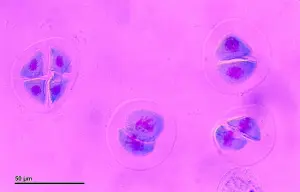
The final outcome of meiosis is the production of four genetically unique haploid daughter cells. In human biology, this means you start with a single diploid cell containing 46 chromosomes and finish with four gametes, each possessing exactly 23 chromosomes. Think of this process like editing a massive manuscript down to its essential, individual chapters. You are stripping away the redundant copies to ensure that when two sets of “chapters” meet during fertilization, the final book remains the correct length.
The Two-Stage Reduction Mechanism
Meiosis is not just a simple division. It is a precise, two-part operation designed to reduce genetic material while maximizing variety. If you visualize the process incorrectly, you will fail to grasp how species maintain their chromosome count across generations.
- Meiosis I (Reductional Division): The cell separates homologous pairs. Imagine a stack of 46 cards that you sort into two piles of 23. You are cutting the total number of unique types in half.
- Meiosis II (Equational Division): The cell separates sister chromatids. This is like taking those 23 piles and splitting the identical “photocopies” you made earlier.
By the end of this sequence, you have four cells that are haploid. They contain only one set of chromosomes instead of the two sets found in your standard body cells.
Why Genetic Diversity is a Biological Survival Strategy
The four resulting cells are never identical. This is not a mistake; it is a feature. Through processes like crossing over and independent assortment, nature reshuffles the deck every time a gamete is formed. Crossing over is similar to swapping parts between two different engines to build a unique hybrid. Independent assortment is like dealing a hand of cards; the order in which they appear is random and changes with every deal.
- Enhanced Adaptation: By creating unique genetic combinations, you increase the chances that some offspring will survive environmental shifts or new diseases.
- Avoiding Genetic Stagnation: If meiosis produced identical clones, a single specialized parasite could wipe out an entire population. Diversity acts as your biological insurance policy.
Field Notes: Common Pitfalls in Diagnostic Analysis
When analyzing cell data or lab results, professionals often make the same mistakes. Avoid these errors to keep your data accurate.
Confusing Sister Chromatids with Homologous Chromosomes: Homologous chromosomes are the paired set inherited from your parents. Sister chromatids are identical copies attached at the centromere. If you treat them as the same thing, your count of the genetic payload will be wrong.
Treating Meiosis like Double-Mitosis: Mitosis creates exact clones for tissue repair. If meiosis functioned like mitosis, your chromosome count would double every time a gamete fused. This leads to polyploidy, which is generally lethal for complex organisms. You must view meiosis as a subtractive process, not a duplicative one.
Practical Guidelines for Assessing Meiotic Success
When you are evaluating a cell stage, look at the centromeres. This is your most reliable metric. If the number of centromeres is half the original cell’s count, the reductional phase has succeeded. If you are communicating these results, always clarify that the goal is not just a smaller cell, but a specialized gamete.
These gametes are essentially specialized delivery vehicles. They carry the exact “dosage” of DNA required to spark the development of a new organism. A slight error in this count—an extra or missing chromosome—often leads to developmental failures. Precision in your terminology reflects a professional grasp of how the organism avoids genetic overload.
The Critical Role of the Haploid State
The transition to a haploid state is the fundamental anchor of sexual reproduction. Without this reduction, the fusion of two gametes would create a cell with double the required DNA, rendering the offspring non-viable. By mastering the distinction between the reductional and equational phases, you gain a clear understanding of how nature balances stability with constant, necessary innovation. Keep this distinction at the forefront of your analysis to avoid the most common conceptual gaps in reproductive biology.
Content updated on 2026-10-19