Understanding the Science of Food Preservation
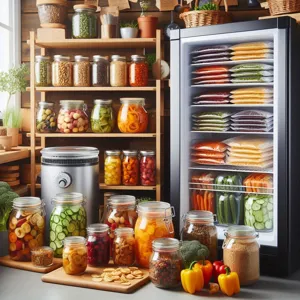
Preserving food is essentially an exercise in biological management. Your goal is to slow down or stop the natural oxidation and microbial growth that breaks down nutrients. Think of the process like a fortress: you are building layers of defense—acid, temperature, or low moisture—to keep unwanted bacteria and fungi outside the perimeter of your food.
The Critical Distinction Between Canning Methods
Canning is your best bet for long-term pantry storage, but you must respect the science of acidity. Microorganisms like Clostridium botulinum thrive in low-acid environments, which include most vegetables and meats. This is why using a pressure canner is non-negotiable for these specific items.
- Water-bath canning: Only for high-acid foods like jams or pickled fruits where the pH is low enough (below 4.6) to naturally inhibit toxins.
- Pressure canning: The only safe way to heat low-acid foods above the boiling point of water. It reaches 240 degrees Fahrenheit, a temperature required to destroy dormant spores that standard boiling cannot touch.
Field Experience: Never guess the acidity of your ingredients. If a recipe calls for a specific amount of bottled lemon juice, do not substitute it with fresh juice, as the acidity of fresh lemons varies too much to guarantee safety.
Mastering Cryogenic Control: Freezing and Blanching
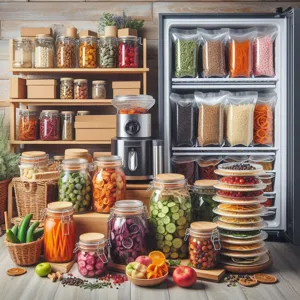
Freezing is the simplest preservation method, but it is often done incorrectly. The main enemy here is enzymatic activity, which continues even at sub-zero temperatures. These enzymes act like a slow-motion shredder, degrading the flavor and color of your produce over time.
The Blanching Process: Before freezing vegetables, submerge them in boiling water for one to three minutes, then move them immediately to ice water. This acts as a thermal ‘off switch’ for those enzymes. Without this step, your frozen broccoli will taste like cardboard after just two months in the freezer.
Dehydration: The Art of Moisture Control
Bacteria and mold need water to replicate. By removing that water, you are essentially starving the spoilage organisms. Success in dehydration depends on your ability to maintain consistent airflow and temperature rather than just heat.
- Uniformity: Use a mandoline slicer to get even thicknesses. If one piece is thicker than another, the thinner one will be bone-dry while the thicker one retains moisture and attracts mold.
- Airflow: Do not crowd your dehydrator trays. Think of it like drying laundry; if the clothes are stacked, they stay damp. Air must move freely between slices to carry the moisture away.
Fermentation vs. Pickling: Know the Difference
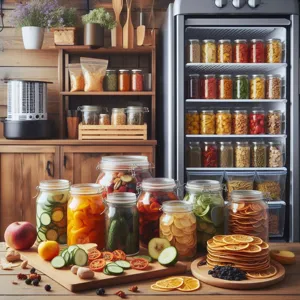
Many home cooks confuse these, but they function differently. Fermentation is an active, living process where you encourage beneficial bacteria (lactobacillus) to convert sugars into lactic acid. It is an active ecosystem.
Pickling is the passive addition of acid. You are creating a hostile environment by submerging food in a vinegar-based brine. The key here is the ratio. If your recipe calls for a 1:1 ratio of water to vinegar, do not dilute it to save money. If the solution becomes too watery, the pH rises, and the vinegar loses its power to act as a preservative shield.
Vacuum Sealing: The Secret to Long-Term Quality
Oxygen causes fats to go rancid and promotes freezer burn, which is essentially the dehydration of your food by the freezer air. Vacuum sealing removes that oxygen, but it creates a specific challenge with liquids. If you vacuum seal a marinated piece of meat, the machine will suck the liquid right into the vacuum seal pump, ruining the internal seals.
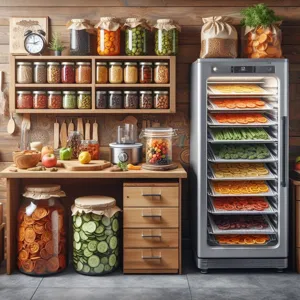
The ‘Pre-Freeze’ Hack: Freeze your liquid-heavy items on a tray first until they are solid. Then, place the frozen block into your vacuum bag and seal it. This keeps the juices inside the bag rather than inside your expensive machine.
Root Cellaring: Strategic Storage Zones
You do not need a Victorian basement to root cellar effectively. You just need a dark, cool, and ventilated space. The most common mistake is storing incompatible items together.
- The Ethylene Factor: Some fruits and vegetables, like onions and apples, release ethylene gas, a natural plant hormone that triggers ripening and sprouting.
- The Segregation Rule: If you store onions in the same crate as potatoes, the ethylene from the onions will force the potatoes to sprout in weeks rather than months. Keep them in separate bins or different areas of your storage space to prevent premature decay.
The Golden Rule of Safety
When preserving food, follow tested recipes to the letter. Do not reduce sugar or salt if the recipe lists it for safety reasons, as these ingredients often play a role in lowering water activity. Always label your jars with the date and contents. If you find a mystery jar in the back of your pantry, assume it is unsafe and discard it. Preservation is about predictability; never gamble with your health for the sake of an extra jar of preserves.
Content updated on 2026-10-17