
Decoding the Most Iconic Rivalries in American Football
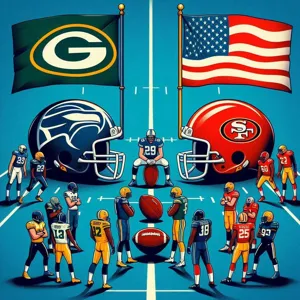
In American football, a true rivalry transcends the standard schedule. These matchups are high-stakes tactical chess matches where historical precedent meets immediate psychological pressure. To understand why these games carry such weight, you must look beyond the fan passion and analyze the cold, hard mechanics of game management.

We will break down how legendary programs and franchises approach these games. By understanding the data behind the emotion, you can evaluate these contests with the same precision as a professional scout or an experienced front-office analyst.
The Green Bay Packers vs. Chicago Bears: Tactical Inertia
As the oldest rivalry in the NFL, the Packers and Bears series provides a clear look at how repeated exposure impacts strategy. When two teams play twice annually for over a century, their playbooks become transparent. They essentially know each other’s offensive DNA by heart.
- The Line of Scrimmage Metric: History shows that games are decided in the trenches. Data indicates that the team winning the battle at the line of scrimmage wins over 70% of these encounters. It is a fundamental leverage battle.
- The Weather Variable: Games at Lambeau Field during late autumn force a reversion to power-run schemes. Coaches minimize vertical passing to avoid turnover risks on slick turf.
- Field Experience: A common mistake for coaching staffs here is ‘over-preparation.’ They try to reinvent their scheme to surprise the opponent. This often leads to communication breakdowns. Sticking to a proven offensive identity usually beats a complex, unproven game plan.
The Ohio State vs. Michigan Clash: The Recruitment Engine
In college football, ‘The Game’ is won long before kickoff. It is a competition decided in the recruitment offices. Success here is about talent acquisition and resource allocation rather than just game-day adjustments.
- Recruitment KPIs: Tracking the four-star and five-star rating density over three recruiting cycles shows a massive correlation with the final score. You are watching a battle of institutional investment.
- Third-Down Efficiency: This is your primary metric. The team that consistently sustains drives on third down limits the opponent’s opportunities and dictates the game pace.
- Personnel Management: A common error is drastically changing the defensive scheme for this one game. Coaches who move away from their base principles often see their players hesitate, leading to explosive plays by the opposition.
The Iron Bowl: Alabama vs. Auburn and the Volatility Factor
The Iron Bowl is defined by high-variance outcomes. In this matchup, standard deviation is significantly higher than in any other game on the calendar. You should expect the unexpected.
- Aggression Metrics: Coaching staffs that play ‘to win’ instead of ‘to not lose’ typically prevail. Passive play-calling in the final two minutes often leads to defensive collapses or missed scoring opportunities.
- The Special Teams Variable: Special teams units are the X-factors here. A difference of just five yards in average starting field position often creates a ten-point swing in production. Always track the punting and return yardage stats before kickoff.
How to Analyze Rivalries Like a Professional

To analyze these games accurately, move beyond fan sentiment. Treat rivalries as performance stress tests that amplify existing team tendencies. If a roster struggles with discipline, expect that to manifest as a high penalty count when the pressure is at its peak.
Pro-Level Analytical Framework
- Penalty Correlation: High-tension games cause a spike in undisciplined play. Check the average penalty yards for both teams over the season. The team with the higher seasonal average is statistically more likely to implode under rivalry pressure. Think of it like a car engine; if it runs hot during a regular commute, it will definitely overheat during a race.
- Historical Play-Calling Patterns: Ignore the media narratives. Look at the last three years of head-to-head play-calling. Does the head coach become overly conservative when facing this specific rival? This behavioral pattern is a reliable predictor of their future decision-making process.
- The Transfer Portal Reality: Modern college rosters are transient. Do not rely on historical team prestige. Focus on the current roster’s efficiency metrics and transfer arrivals. A jersey might have history, but the players inside it change every single year.
When you watch these rivalries, identify the specific weakness each team is forced to expose when they face their arch-nemesis. The team that successfully exploits those vulnerabilities, rather than the one playing on pure emotion, is almost always the one that wins. Focus on the tactical shifts that occur when coaching staffs hit their decision-making limits.
Content updated on 2026-09-28