The Importance of Sound Design in Cinema
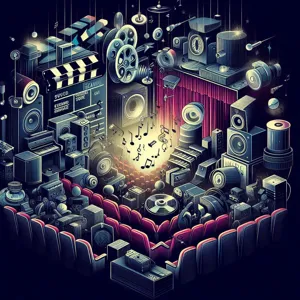
Most viewers focus on cinematography, yet sound design dictates the emotional outcome of any scene. You should view audio not as an accessory to visuals, but as a secondary narrative track. If the visuals are the body of the film, the sound design is the nervous system that transmits the actual feeling to the audience.
The Three Pillars of Sonic Narrative
Effective sound design relies on balancing three distinct layers. Think of these like the ingredients in a recipe; if you add too much salt, you lose the subtle flavors of the dish.
- Dialogue: This is the primary driver of your story. Every word must remain legible. If your music or effects compete with the vocal track, you lose the viewer’s intellectual engagement.
- Sound Effects (SFX): These ground the scene in physical reality. Whether it is the subtle rustle of fabric or a heavy metallic impact, SFX bridge the gap between a digital screen and a tactile world.
- Music and Score: Use music to dictate the pacing and internal emotional state of your characters. It functions as a non-verbal narrator that tells the audience how to feel before they even realize it.
Using Silence as a Tactical Tool
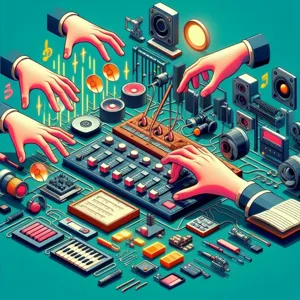
Amateur editors often feel the need to fill every second with sound. This is a mistake. Silence is your most potent weapon in the sound designer’s toolkit. By creating a sensory void, you force the audience to lean into the screen. When you eventually introduce a single, sharp sound, it registers as a genuine threat rather than background noise.
Field Experience: In thrillers or tense dramas, strip away ambient noise completely for five seconds before a key reveal. The sudden lack of input forces the viewer’s brain to switch from passive observation to high-alert focus.
The Necessity of Foley and Texture
On-set microphones prioritize speech, which often leads to thin-sounding recordings. This is why Foley artists are essential to high-end cinema. They reconstruct the physical world in a controlled environment to ensure depth and texture.
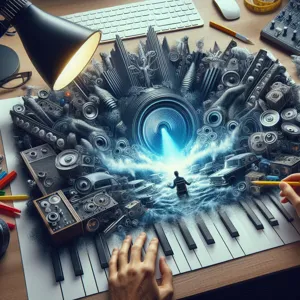
You can replicate this at home. Use simple, everyday objects to build custom audio layers. A crisp cabbage crunch often sounds more like a bone break than any digital effect found in a stock library. This manual layering adds an authenticity that digital synthesis simply cannot replicate.
Mastering Dynamic Range for Engagement
A common error is keeping your audio levels consistent throughout a film. This creates a flat experience that leads to viewer fatigue. You must manage dynamic range, which is the mathematical difference between your loudest peaks and your quietest whispers.
Think of your audio track like a human heartbeat. It is the variation between the beat and the rest that denotes life. If you keep the volume constant, you kill the pulse of the scene. Always create contrast to keep the audience’s ears engaged.
Spatial Audio: Moving Beyond the Screen
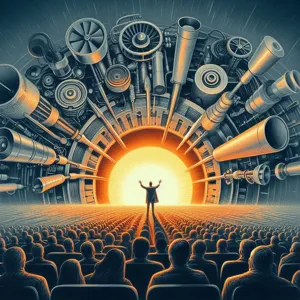
Modern cinema has shifted from two-dimensional stereo to immersive, object-based soundscapes. We no longer just pan audio left or right; we place it in 3D coordinate space. This is like moving from a flat drawing to a 3D architectural model. When a sound moves behind or above the viewer, it breaks the final barrier of the screen, pulling the audience directly into the environment.
Learning from Masterclass Productions
If you want to understand how sound design shifts a narrative, analyze these three films:
- Dunkirk: Christopher Nolan uses a persistent ticking watch as a rhythmic heartbeat. It creates constant, inescapable tension that drives the plot forward without needing dialogue.
- A Quiet Place: The sound design is the primary antagonist. Silence is treated as a physical boundary. Any deviation from silence changes the stakes of the scene instantly.
- Star Wars: Ben Burtt built iconic sounds by layering mundane elements, such as projector motors and TV hums. This proves that creative, lo-fi layering often sounds more grounded than sterile, expensive synthesizers.
Final Advice: Design Before You Shoot
Do not treat sound as a post-production fix. Start planning your soundscape during pre-production. Before you film a scene, ask yourself: What is the emotional frequency of this location? How does the environment sound when the character is at their lowest point? By prioritizing audio from day one, you transition your project from a series of images into a visceral, living experience.
Content updated on 2026-10-03