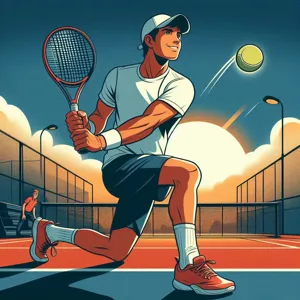
Tennis – What are the best ways to practice my drop volleys?
Credit : whatcanu.com
The drop volley is a tactical masterstroke that transforms a standard exchange into a point-ending sequence. Unlike a standard volley, which relies on redirection of pace, the drop volley demands a controlled dissipation of energy. You are essentially turning a high-speed projectile into a dead object the moment it kisses your strings.
The Biomechanics of Soft Hands
Credit : whatcanu.com
To execute this shot, stop viewing the racket as a stiff frame. Think of your racket head as a shock absorber in a car; its job is to neutralize the impact, not to bounce the ball back with force. The Continental grip is your foundation here.
Relaxed Grip Pressure: Hold your racket with a loose grip, perhaps a 3 out of 10 on the tension scale. A tight fist prevents the wrist from absorbing the ball’s momentum.
The Cushioning Motion: At the moment of contact, let your racket move slightly backward, toward your own body. This deceleration is the secret to killing the ball’s pace.
Compact Impact: Your contact point must remain in front of your body. If you let the ball get behind you, you lose the ability to control the trajectory.
Professional Insight: Analyzing the Pros
Watch players like Roger Federer or Ons Jabeur. You will notice they rarely set up for a drop volley with a big wind-up. They use their feet to get into a stable position, then rely entirely on the subtle rotation of the shoulder and a relaxed wrist. A pro never forces a drop volley; they wait for the perfect ball that sits above the net cord, allowing them to angle it downwards.
Effective Practice Drills for Instant Improvement
Credit : whatcanu.com
Progressive practice is better than mindless repetition. Use these drills to build your touch.
The Service Line Progression: Stand on the service line and have a partner feed you waist-high balls. Your goal is to land 10 consecutive volleys inside the opponent’s service box. If it travels past the service line, you are using too much push and not enough cushion.
The Solo Wall ‘Dead Ball’ Drill: Stand three meters from a wall. Aim to hit the ball so softly that it barely returns to you. If the ball bounces twice before hitting the wall, you are succeeding. This builds the ‘finger-feel’ required for high-pressure situations.
The Target Practice: Place a towel in the corner of the service box. Practice hitting the ball to land on the towel consistently. Accuracy beats power every single time in net play.
Field Experience: Common Errors to Avoid
Credit : whatcanu.com
Many players fail because they deploy the drop volley at the wrong moment. Here is a breakdown of when to hold back.
Avoid the Net-Rusher: Never attempt a drop volley when your opponent is already charging the net. You are effectively handing them an easy put-away volley. Save the drop volley for opponents pinned deep behind the baseline.
The ‘Scoop’ Trap: Beginners often try to dig the ball out from below the net tape. This is physically inefficient and forces a high, floating ball that the opponent will punish. Only play the drop volley when you can take the ball at or above net height.
Neglecting the Split Step: If you are moving when you hit the ball, you lack stability. Always perform a sharp split step just before your opponent strikes. This gives you the split-second of stillness required for precision.
Mastering the Mental Execution
Stop focusing on the outcome, such as whether you hit a winner or not. Focus exclusively on the sensation of the ball leaving the strings. If you feel the vibration in the center of the racket, you are on the right path. Accept that you will hit the net during training; it is the only way to find the boundary of how much pace you can safely absorb. Discipline your practice sessions by tracking your ‘drop-in’ percentage rather than the aesthetic quality of the stroke. Precision is a result of consistent, low-tension mechanics.