How to build a raised garden bed?

A raised garden bed is more than a wooden frame; it is a high-performance environment for your plants. By controlling the soil quality and drainage, you remove the guesswork associated with native backyard soil. This guide provides the technical specifications needed to build a durable, productive structure that lasts.
Selecting the right dimensions
Most beginners build beds that are too wide. If you cannot reach the center from both sides, you will eventually step into the bed, which compacts the soil. Compaction kills the air pockets roots need to thrive. Aim for a maximum width of 4 feet. If you are building against a wall or fence, cap the width at 2 feet to ensure easy reach.
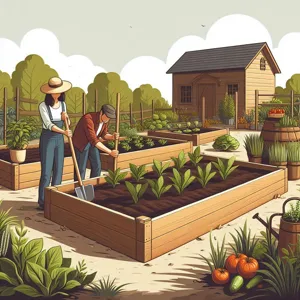
Regarding depth, 12 inches is the minimum for shallow-rooted vegetables like lettuce and radishes. If you plan to grow deep-rooted crops like tomatoes, carrots, or potatoes, go for at least 18 to 24 inches. This extra depth provides more room for root expansion and better moisture retention during hot spells.
Calculating your materials
Before buying wood, calculate the volume of soil required. Use this simple formula: Multiply the length x width x depth (in feet) of your bed. For a 4’x8′ bed that is 1 foot deep, you need 32 cubic feet of soil. Always order 10% extra, as soil settles over time after the first few waterings.
When selecting wood, stick to 2×10 or 2×12 nominal lumber. A 2-inch thickness is critical for structural integrity. Thinner boards will bow outward under the immense weight of damp soil. For longevity, opt for rot-resistant species like Cedar, Redwood, or Black Locust. If you choose standard pine, accept that the frame will likely need replacement within 4 to 5 years.
Structural reinforcement techniques

A common error is skipping structural supports. When you fill a large bed with wet soil, the force against the side walls is massive. It acts like water behind a dam, pushing the boards outward.
- Corner Posts: Always use 4×4 posts in each corner. Drive them flush with the bottom of your side boards to act as an anchor.
- Center Bracing: If your bed length exceeds 6 feet, install a cross-brace. Use a piece of 2×4 that connects the two long side walls at the midpoint of the bed. Secure this with heavy-duty exterior deck screws to prevent the middle from bulging.
- Pilot Holes: Always drill pilot holes before inserting screws. This prevents the wood from splitting, which creates entry points for moisture and premature rot.
The ideal soil profile
Standard topsoil is often too dense for a raised bed. Think of soil as a sponge: it needs to hold water but still allow excess to drain. Use the following recipe for the best results:
- 60% Premium Topsoil: This serves as the structural base for your plant roots.
- 30% Organic Compost: This is your nutrient bank. It provides slow-release food for the entire season.
- 10% Aeration Material: Use coarse perlite or horticultural grit. These act like tiny spacers between soil particles, ensuring oxygen can reach the roots.

Avoid buying cheap bagged soil from big-box stores unless you are willing to amend it heavily. If you have the space, mixing your own blend in a wheelbarrow before filling the bed is the most reliable way to ensure a uniform growing medium.
Field notes and common mistakes
Every professional gardener knows that moisture management is the secret to success. Raised beds drain faster than ground soil, meaning you must water more frequently. Avoid the trap of light, daily watering. This encourages shallow, weak roots. Water deeply two to three times a week to force roots to grow downward toward the moisture.
If you build on top of an existing lawn, lay down a double layer of thick cardboard at the base. It effectively kills the grass by blocking light, but it decomposes within a season, allowing earthworms to enter your new bed. Never use plastic weed barriers at the bottom. They prevent beneficial worms and microorganisms from moving between the native ground and your raised bed, effectively cutting off your garden from the natural ecosystem.
Content updated on 2026-08-29