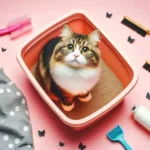
Yes, many dogs can learn to use an indoor litter box or potty area. It works best for small dogs, dogs in high-rise apartments, puppies too young to go outside freely, seniors with mobility problems and owners with long workdays. Large dogs are usually better trained to go outside.
Choose the setup
- Box: a large, low-sided box or tray with one side lower for easy entry. Some boxes are designed specifically for dogs.
- Material: dog litter made of paper or wood pellets, which is larger than cat litter and less likely to be eaten or tracked. Do not use clumping cat litter: dogs may eat it.
- Alternatives: real or artificial grass patches and absorbent pee pads in a holder.
Place it in a quiet, easy-to-reach spot, away from the food and water bowls, and keep it there.
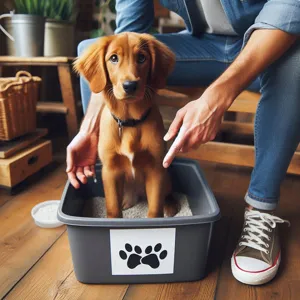
Step-by-step training
The method mirrors outdoor house training:
- Take your dog to the box at key times: after waking, after meals, after play, and every 1 to 2 hours for puppies.
- Use a cue word such as “go potty” while your dog is in the box.
- Reward immediately with a treat and praise when your dog goes in the box.
- Supervise between trips. If you see sniffing or circling, calmly carry or lead your dog to the box.
- Confine your dog to a small area with the box when you cannot watch, at first.
- Leaving a small soiled piece of paper or pad in the box helps your dog recognize the spot by smell.
Dealing with accidents
Never punish accidents: it teaches dogs to hide when they go, not where to go. Interrupt gently if you catch your dog in the act, move to the box, and reward if they finish there. Clean accidents with an enzyme cleaner to remove the smell, see the best ways to clean up pet accidents.
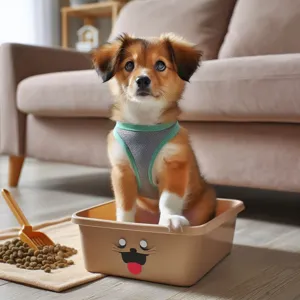
Keep it clean
Scoop solids daily and change pellets or pads frequently. A dirty box is the main reason dogs stop using it. Wash the box with mild soap regularly.
Combining indoor and outdoor
Many owners use the box during the day and outdoor walks the rest of the time. Dogs can learn both, though switching entirely to outdoors later may take some retraining.
When accidents point to a health problem
Frequent urination, straining, blood in the urine or sudden accidents in a trained dog can indicate a urinary infection or other medical issue.
The same principles of house training are explained in puppy training and socialization. For small-space living, see how to find a pet-friendly apartment.