Are there other planets like Earth in the universe?
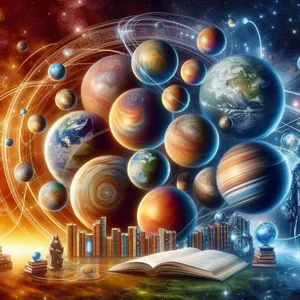
Finding a true Earth twin is no longer a pursuit of science fiction. It is the core mission of modern astrophysics, backed by over 5,500 confirmed exoplanets. Recent data from the Kepler mission and TESS (Transiting Exoplanet Survey Satellite) suggests there could be billions of rocky, Earth-sized planets in the Milky Way alone. Your understanding of whether another Earth exists depends on moving past speculation and looking at hard, measurable constraints.
The Critical Benchmarks for an Earth-like World
To identify a prime candidate for an Earth twin, scientists rely on three physical benchmarks. Think of these as a house-hunting checklist for biological survival. If a planet fails one, the odds of it hosting life drop significantly.
- Rocky Composition: We ignore gas giants. A planet must have a solid, silicate surface. Without this bedrock, you lack the stable foundation necessary for complex chemistry to organize into biological structures.
- The Habitable Zone: This is the distance from a star where temperature permits liquid water. If you get too close, water vaporizes; too far, it freezes. It is a celestial balance point, akin to placing a coffee cup at the exact distance from a heater where it stays warm but does not evaporate.
- Atmospheric Stability: A planet needs an atmosphere to shield the surface from stellar radiation. Think of this like a thick, invisible umbrella that blocks harmful solar particles from breaking down potential biological molecules.
Quantitative Methods: How We Detect Worlds
We cannot take high-resolution photos of distant planets yet. Instead, we use indirect detection tools that function like digital forensics. These methods have provided the datasets that confirm the existence of these worlds.
- The Transit Method (The Flicker Technique): Imagine a moth flying in front of a distant, high-powered spotlight. You notice the light dim by a tiny fraction. By tracking this recurring dip, we calculate a planet’s radius with high precision. For instance, an Earth-sized planet passing before a Sun-sized star creates a dip of only 0.01% in brightness.
- Radial Velocity (The Wobble Method): Gravity is a two-way street. A planet pulls on its star, causing it to wobble in its orbit. We detect this by measuring shifts in the light spectrum. It is like detecting someone pulling on a rope tied to a pole; the pole moves, even if the person is hidden from view. This reveals the planet’s mass.
Common Pitfalls in Exoplanet Analysis

A common error in media reporting is assuming that a planet in the habitable zone guarantees life. This is scientifically inaccurate. Consider these real-world constraints before getting excited by a headline.
- Red Dwarf Risks: Many exoplanets orbit red dwarf stars. These stars frequently erupt with violent flares. These events can strip a planet of its atmosphere in a heartbeat, leaving the surface scorched and lifeless.
- Tidal Locking: Some planets have one side permanently facing their star, causing one side to burn while the other freezes. This extreme environment makes the development of life significantly harder than on our rotating world, where heat is distributed evenly.
- The Spectroscopy Limitation: Stop looking for signals from aliens. Start looking for spectroscopy data. Researchers use this to analyze the light passing through a planet’s atmosphere. It acts like a chemical fingerprint, revealing if oxygen, methane, or water vapor are present in the mix.
Real-World Data: The TRAPPIST-1 Case
The TRAPPIST-1 system is the gold standard for current studies. It contains seven Earth-sized planets orbiting a single star. Three of these reside firmly in the habitable zone. While this sounds like a paradise, current JWST data suggests these worlds might lack substantial atmospheres due to the host star’s extreme activity. This is a critical lesson: being in the right location is not enough if the planet cannot retain its protective gas layers.
The Future of Atmospheric Analysis
We are currently in a golden age of observation. The James Webb Space Telescope (JWST) is actively probing the chemical composition of distant worlds. We are no longer asking if a planet exists; we are quantifying what it is made of.
- Biosignature Detection: Future missions will focus on detecting combinations of gases—like methane and oxygen together—that would not exist in equilibrium without life-based biological processes.
- Coronagraph Advancements: Engineers are developing hardware to physically block a star’s glare. This will eventually allow us to see the faint reflected light of planets directly, bypassing the need for indirect detection.
If you take anything away from this search, realize that we are reverse-engineering the cosmos. Finding another Earth is about measuring the rarity of our own existence through precision data. Keep an eye on spectroscopy updates from the JWST; that is where the breakthrough to finding a genuine, habitable Earth-twin will occur.
Content updated on 2026-09-07