Why Join a Motorbike Club? The Real Benefits
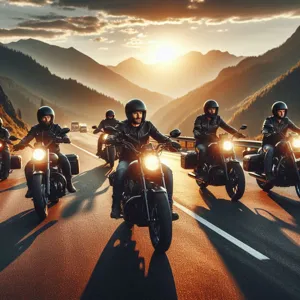
Motorcycling is often romanticized as a lone-wolf activity. However, relying solely on your own experience limits your growth as a rider. Joining a motorbike club shifts your riding from a solitary hobby to a structured, high-performance community. Whether you are a beginner or a veteran, you gain access to a network that acts as a force multiplier for your skills and your safety.
The Practical Advantages: Shared Infrastructure
Think of a motorbike club as an open-source technical department. Instead of paying a professional shop to diagnose a mysterious rattle, you have a room full of mechanics at your disposal. This is essentially crowdsourced expertise.
- Technical Knowledge Transfer: You stop relying on generic YouTube videos and start learning specific quirks of your machine from people who have turned every bolt on that exact model. It is the difference between reading a textbook and having a private tutor.
- Safety Through Collective Discipline: Riding in a formation is a skill you cannot learn alone. You learn how to communicate without words, maintain proper spacing, and scan for road hazards as a team rather than as an individual.
- Economic Leverage: Most clubs maintain formal relationships with local dealerships and parts suppliers. Your membership fees are often offset entirely by the collective bargaining power the club uses to secure discounts on tires, gear, and annual maintenance services.
- Curated Route Discovery: Google Maps often directs you to the fastest route, which is usually the most boring. Veteran club members know the ‘backdoor’ scenic paths that aren’t indexed on GPS devices, focusing on technical corners and high-quality pavement.
Building a Professional Support Network
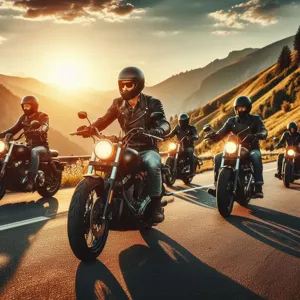
A club provides a psychological safety net that is impossible to replicate solo. If you experience a mechanical failure on a remote road, you aren’t waiting hours for a tow truck. You have a direct line to members who prioritize getting your machine back on the road.
The Power of Real-Time Mentorship
New riders often overestimate their abilities on high-displacement bikes. A mentor acts as a performance buffer. They don’t just tell you how to ride; they observe your throttle control, body positioning, and line choice during group rides. They offer immediate, tactical feedback that accelerates your progress exponentially compared to solitary practice.
Social ROI and Mental Engagement
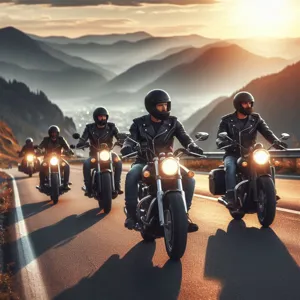
Isolation is a common barrier to consistent riding. A club provides a structured environment to build a social circle based on shared values. The shared goal of a destination ride removes the friction of typical social settings. You already have a common language, which allows you to build genuine professional or personal connections much faster.
How to Select the Right Club for Your Profile
Not all clubs share the same values. Joining the wrong group can lead to unnecessary risk or frustration. Use this professional audit process before committing:
- Audit the Group Goals: Does the club prioritize high-mileage touring, competitive track days, or community charity work? If your riding style doesn’t match the club’s primary mission, you will eventually drift apart.
- The Guest Experience: Never join on day one. Attend an open breakfast ride or a public meet-up. Observe how they treat new people. If the environment feels cliquish or exclusionary, look elsewhere.
- Analyze the Safety Culture: Does the group have clear hand signals and formation protocols? Avoid any club that encourages ‘stunting’ or high-speed recklessness on public roads. A serious club prioritizes the safety of the slowest rider in the pack.
- Evaluate Technical Autonomy: If you value DIY maintenance, look for clubs that organize regular ‘wrench days’. These are informal clinics where members trade labor and tool access to keep everyone’s bike in peak condition.
Field Experience: Mistakes to Avoid
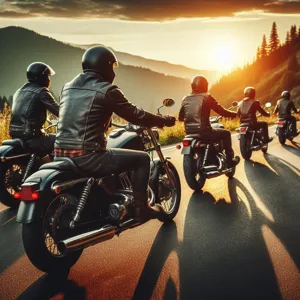
Avoid the ‘chasing’ trap. Many new members feel pressured to match the pace of faster riders on their first few outings. This is a common cause of accidents. A professional club will always prioritize group cohesion over speed. If the lead riders don’t wait for the tail, you are riding with the wrong group.
Furthermore, don’t view the club as a service provider. It is a reciprocal system. The value you extract is directly proportional to your contribution. Volunteer for event planning or logistics early on. This integrates you into the social fabric and grants you access to the ‘inner circle’ of knowledge and support.
The Final Verdict
Joining a motorbike club is an investment in your long-term riding competency. It provides an accountability framework that keeps you safe, a technical repository that saves you money, and a social environment that enhances your overall lifestyle. If you want to move beyond being a casual owner and become a true practitioner of motorcycling, find a local group and reach out for their next public event. You will find that the best part of the ride is the standard of excellence you set together.
Content updated on 2026-09-09