How to Maximize Your Room’s Perceived Square Footage
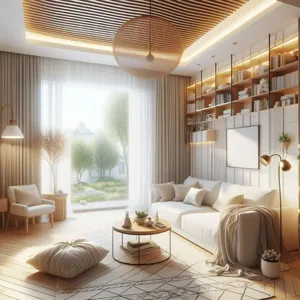
Small rooms often feel restrictive because of poor spatial planning rather than lack of physical space. To create a spacious environment, you must manipulate visual geometry. Think of your room as a graphic layout: if every corner is filled, the design feels ‘noisy.’ If you create white space, the room gains breathing room.
The Principle of Floor Visibility
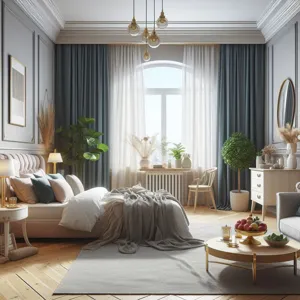
The most effective way to make a room feel larger is to expose as much of the floor as possible. When your eyes scan a floor without interruption, the brain perceives the room as a continuous, expansive area. If the floor is covered by legs, bases, and clutter, your brain interprets the space as segmented and small.
- Prioritize leggy furniture: Choose sofas and chairs elevated on slim legs. Seeing the floor beneath your furniture adds invisible inches to your square footage.
- Adopt the 30-inch rule: Main walkways should be at least 30 inches wide. Think of this like a highway; if it is too narrow, the room feels like a bottleneck.
- Leverage wall-mounted pieces: Install floating desks or bedside shelves. Removing the base of a piece of furniture eliminates the visual ‘anchor’ that makes a room feel heavy.
Mastering Scale: Why Bigger is Often Better
A common mistake is filling a small room with tiny, spindly furniture. This creates visual clutter. Instead, use one or two large statement pieces to ground the room. Think of this like a balanced meal: a few nutrient-dense ingredients are better than a dozen empty snacks.
- Anchor with a statement piece: One high-quality, full-sized sofa is superior to several small, flimsy chairs that make the space look like a waiting room.
- Multi-functional design: Every object must earn its keep. Use ottomans that double as storage or coffee tables that expand into dining surfaces.
- The storage trick: Utilize bed frames with integrated drawers. This turns dead space into high-capacity storage, removing the need for extra bulky dressers.
Hacking Light to Erase Boundaries
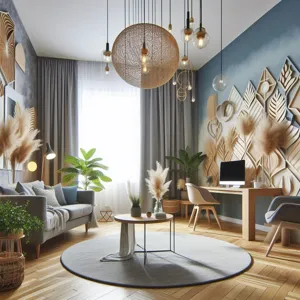
Light is a structural material. If corners are dark, your room has hard walls. If corners are lit, the boundaries seem to push outward. Use lighting to extend the walls beyond their physical limits.
- Layer your light: Do not rely on one ceiling fixture. Use floor lamps in corners to push light into shadows. This makes walls seem further away.
- Mirror placement: Place a mirror opposite a window or behind a lamp. This creates a virtual window, effectively doubling the perceived depth of the room.
- Sheer window treatments: Replace heavy drapes with translucent fabrics. These allow natural light to flood in, softening the transition between inside and outside.
Verticality and Eye-Level Calibration
When you cannot build out, you must build up. Directing the eye toward the ceiling increases the perceived volume of any space. Treat your vertical wall space as a tool for height adjustment.
- Extend your shelving: Install bookshelves that reach the ceiling. This draws the gaze upward, emphasizing the height of the room rather than the footprint.
- High-hung hardware: Mount curtain rods close to the ceiling molding, not the top of the window frame. This visual trick tricks the eye into seeing taller, more impressive windows.
- Artwork alignment: Hang art at standing eye level. Hanging art too low anchors the room to the floor; placing it higher creates a grand, expansive atmosphere.
Common Mistakes and Field Lessons

Avoid the trap of ‘decorative hoarding.’ In a compact room, surface area is your most precious asset. If your surfaces are crowded with small knick-knacks, the brain processes this as chaos.
- Clear the surfaces: Keep tabletops clean to create a visual ‘rest.’ Use hidden storage for smaller items to maintain a curated look.
- The color trap: Avoid high-contrast patterns on large surfaces. Stick to a monochromatic palette for walls and major furniture to prevent the room from feeling chopped up.
- Cable management: Nothing shrinks a room faster than visible tangles of cords. Use cable sleeves or clips to keep wires flush against furniture, maintaining clean, uninterrupted lines.
By shifting your focus from ‘filling’ to ‘clearing,’ you can fundamentally change how a room feels. Treat every item as a conscious choice. When you provide your eyes with clear paths and vertical relief, the room will naturally appear significantly more spacious.
Content updated on 2026-10-12