Raised beds make vegetable gardening easier: the soil warms up sooner in spring, drains better, is easier to reach and stays loose because nobody walks on it. A rectangular wooden box takes an afternoon to build and lasts for years.

Size and location
- Width: no more than 4 feet if you can reach from both sides, or 2 to 3 feet against a fence. You should reach the center without stepping in.
- Length: 6 or 8 feet works well with standard lumber lengths.
- Height: 10 to 12 inches is enough for most vegetables. Taller beds (24 inches or more) are easier on the back but need much more soil and stronger corners.
- Location: most vegetables need at least 6 to 8 hours of direct sun. Place the bed on level ground, close to a hose.
Choosing the wood
Cedar and redwood resist rot naturally and are the most popular choices, though they cost more. Modern pressure-treated lumber (ACQ or copper azole) is generally considered acceptable for gardens; the old CCA treatment, which contains arsenic, was phased out for residential use in the US in 2003, so avoid reusing old treated wood. Never use railroad ties. Untreated pine is cheap but may only last a few seasons.
Materials for a 4 x 8 ft bed, 11 inches high
- Two 2×6 boards, 8 ft, for the long sides (two layers per side means four boards)
- Two 2×6 boards, 8 ft, cut in half for the short ends
- A 4×4 post, cut into four 11-inch corner blocks
- 3-inch exterior screws
Putting the box together
- Cut the end boards to 4 ft and the corner posts to the bed height.
- Screw the end boards to the corner posts to make the two short sides.
- Connect the short sides with the long boards, screwing into the posts. Drill pilot holes to avoid splitting.
- Set the frame in place, check that it is level, and dig the low side in a little if needed.
- If you have gophers or moles, staple hardware cloth across the bottom. Cardboard on the grass underneath smothers weeds and breaks down.
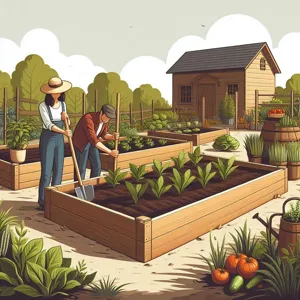
Filling the bed
Do not fill it with garden soil alone: it compacts. A common mix is roughly 60 percent topsoil, 30 percent compost and 10 percent something to keep it light such as coarse bark or perlite, or buy a ready-made raised bed mix. A 4 x 8 x 11-inch bed needs about 1 cubic yard. Top it up with compost every spring.
First plantings
Lettuce, radishes, beans, herbs and tomatoes are reliable starters. Plant densely in blocks rather than rows. If you prefer flowers and shrubs that look after themselves, look at easy-care perennials, shrubs and grasses. The same basic tools, listed in the best tools for a beginner DIYer, are enough for this project.