The living room and dining room are where you spend time with others, often in open or connected spaces. A good color makes them feel welcoming in daylight and at night. A bad one can look completely different from the chip you picked at the store.
Step 1: Study the light
- North-facing rooms get cool, indirect light. Colors look grayer and darker; warm whites, soft yellows, warm greiges and earthy tones help.
- South-facing rooms get warm, bright light most of the day. Almost anything works, and cooler colors can balance the warmth.
- East-facing rooms are bright in the morning and cooler later; west-facing ones are the opposite.
Also think about when you use the room. A dining room used mostly at night will be seen under artificial light.

Step 2: Start from what stays
Choose the paint after the things you cannot easily change: flooring, sofa, rug, fireplace, artwork. Pick up a color from the rug or a painting, or choose a neutral that shares the undertone of your floor.
Step 3: Check the undertone
Two “beiges” can look very different because one leans pink and the other green. Compare a chip next to pure white and next to other colors from the same family: the undertone becomes visible.
Step 4: Test properly
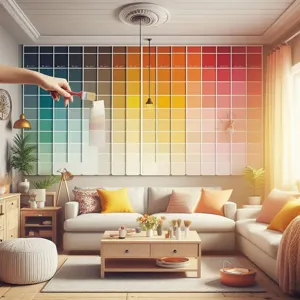
Buy sample pots or large peel-and-stick samples. Put them on several walls, including the darkest corner, and look at them in the morning, afternoon and evening for a few days. A color that looks right on a tiny chip is often too saturated on a whole wall; when in doubt, go a shade lighter.
Ideas for the living room
Soft warm whites and greiges are flexible backdrops. Sage and muted greens are calming. Deep blues or greens on one wall, or the whole room, create a cozy evening space, especially with good lighting.
Ideas for the dining room
Dining rooms can take more drama because people spend shorter periods there: deep green, navy, burgundy, warm terracotta. Darker colors look intimate by candlelight. Warm tones are often said to make a space feel more convivial.
Open-plan spaces
When rooms flow into each other, choose colors from the same family or with the same undertone so the transition is smooth. Use a different color only where there is a natural break, like a corner or a change in ceiling height. A darker tone on a dining wall can define the area without walls.
Finish
Matte or eggshell works on most living room walls; washable formulas help in dining rooms where hands and chairs touch walls. Finishes are compared in how to choose the right paint finish. For the other rooms, see paint colors for bedrooms and paint colors for the kitchen.