What are the Best Ways to Exercise a Dog in Small Spaces?
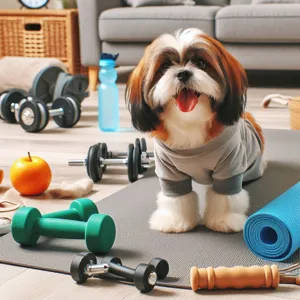
Living in a small apartment does not mean your dog is destined for a sedentary life. Many owners confuse square footage with exercise quality. You do not need a sprawling field to tire out a dog; you need a strategic approach that combines intensity with cognitive load. Think of physical exercise like a battery: sprinting fills it up, but mental work drains it faster than anything else.
The Core Physiology of Small-Space Fitness
You must understand that different dog profiles have different needs. A Border Collie requires rapid-fire problem solving, while a Bulldog needs low-impact resistance training. Focus on the engagement of muscle groups and brain activity rather than raw speed.
Tailoring Activities to Specific Breed Profiles
Your strategy should change based on your dog’s physical build:
- Herding Breeds (Border Collies, Kelpies): These dogs need impulse control. Focus on ‘stay’ and ‘wait’ commands in tight corridors to prevent them from becoming hyper-reactive.
- Brachycephalic Breeds (Pugs, French Bulldogs): These dogs struggle with heat and heavy panting. Focus on slow, deliberate muscle-strengthening exercises rather than explosive jumping.
- Terriers: These breeds thrive on ‘searching’ activities. Use their prey drive by hiding treats in small boxes to engage their nose without requiring them to run laps.
- Senior Dogs: Focus on proprioception, which is the dog’s awareness of where their paws are. Walking over obstacles or shifting weight on a balance cushion helps keep their joints stable and mobile.
High-Intensity Brain Work: The 15-Minute Rule
Mental exhaustion is often more effective than a long, mindless walk. Dedicate 15 minutes to concentrated training. If your dog is panting and looking for a nap afterward, you have hit the target. Use this time for scent work, where you hide treats around a small room and have the dog find them. This uses the olfactory cortex of their brain, which consumes a massive amount of glucose, tiring them out quickly.
Mastering Precision Indoor Fetch

Indoor fetch is a controlled sprint. Use a soft, fabric toy to prevent damage to your furniture. Create a narrow ‘track’ using furniture to block off areas. Encourage the dog to accelerate, then immediately command a ‘sit’ or ‘down’ before they release the toy. This is known as High-Intensity Interval Training (HIIT), and it builds significant muscle control in a fraction of the time.
DIY Agility for Coordination
You can create a professional-grade obstacle course with household items. Balance is key here. Place a broomstick across two stacks of books for a low jump. Use laundry baskets as markers for weave poles. The goal is to move slowly. Speed encourages mistakes; slow movement builds core strength and improves the dog’s focus on your cues.
Crucial Safety Protocols for Small Spaces
Small spaces present specific risks that large yards do not. You must manage your environment to prevent injuries.
- Traction Control: Slippery hardwood or tile floors are injury magnets. High-speed turns on these surfaces lead to ligament tears. Always use yoga mats or area rugs to create high-friction zones for activity.
- The Height Trap: Never encourage jumping onto high surfaces like beds or sofas without a clear plan. Repeated high-impact landings on small joints are a leading cause of early-onset arthritis in apartment dogs.
- Rule Clarity: In a small space, the lines between ‘play’ and ‘chill’ blur easily. Define a specific ‘play zone’ rug. When the dog is on that rug, play is on. When they move off, they must settle. This helps them manage their energy levels.
Common Mistakes to Avoid
Many owners fall into the trap of ‘constant stimulation.’ If you try to entertain your dog every waking minute, you create an anxious animal that never learns to settle. If your dog is pacing after a session, you have over-stimulated them. Transition to a long-lasting chew or a licking mat to bring their heart rate down. Another error is repetitive motion. Don’t play the same game for 30 minutes. Switch tasks every 5 minutes to keep their brain engaged.
Field Experience: Building a Routine
Consistency is your greatest tool. Dogs are creatures of habit. If you exercise them at the same time every day, their bodies will prepare for the activity. Start with a short training session to wake up their brain. Follow this with a physical game like search-and-find. End the session with a period of absolute calm. By controlling the sequence, you teach your dog to navigate their space with purpose and confidence, regardless of how many square feet you have.
Content updated on 2026-10-14