Persians, Maine Coons, Ragdolls, Himalayans and other long-haired cats are beautiful, but their coat tangles easily. Regular grooming prevents painful mats, reduces hairballs and lets you check for skin problems.
The tools
- Wide-toothed metal comb for detangling.
- Fine-toothed comb for the face and finishing.
- Slicker brush for removing loose undercoat.
- Undercoat rake or deshedding tool during heavy shedding seasons (use gently).
- Blunt-tipped scissors and nail clippers for cats.
Brushing routine
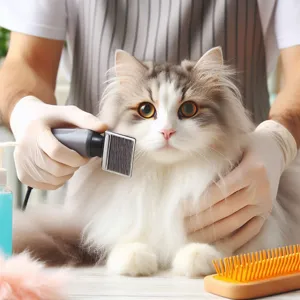
- Daily short sessions are best for long-haired cats, even 5 minutes.
- Start with areas your cat tolerates (back, cheeks), then work to the harder spots: armpits, belly, behind the ears and the “pants” on the back legs, where mats form first.
- Comb in the direction of hair growth, working in small sections down to the skin.
- Keep sessions short and positive, with treats. Stop before your cat gets annoyed.
Dealing with mats
Small tangles can be teased apart with your fingers or the end of a comb, holding the hair at the base so you do not pull the skin. Cornstarch can help loosen them.
Never cut mats with scissors close to the skin: cat skin is very thin and tents up into mats, and accidental cuts are common. For tight or numerous mats, see a groomer or vet, who will use clippers. Severely matted cats may need a full shave (“lion cut”), sometimes under sedation.
Bathing
Most cats rarely need baths, but long-haired cats may need one occasionally if they get greasy or soiled. Use a cat shampoo, lukewarm water, and dry thoroughly. Many owners leave baths to professionals.

Hygiene trims
A “sanitary trim” around the rear keeps litter and feces from sticking to the fur. Trimming the fur between the paw pads can help with traction.
Hairballs
Regular brushing removes loose hair before your cat swallows it. Hairball-control foods and gels may help. Frequent hairballs, repeated vomiting, constipation or loss of appetite need a vet visit.
Nails, ears and eyes
Trim nails every two to three weeks. Check ears for dirt or odor. Flat-faced breeds like Persians often need their eye area wiped daily.
Older and overweight cats
Older cats with arthritis and overweight cats struggle to groom themselves, so they need more help. Weight problems are covered in safe weight loss for cats. A professional can help if grooming is stressful, see how to find a good groomer, sitter or walker.