Why You Must Master the Art of Parrot Health Monitoring
Parrots are biological masters of disguise. In the wild, showing signs of illness marks a bird as easy prey, so they instinctively mask symptoms until they are severely compromised. As a pet owner, you cannot wait for your parrot to ‘look’ sick, because by that point, the disease is likely advanced. You must transition from a passive observer to an active monitor of subtle physiological and behavioral shifts.
Think of your parrot like a high-performance engine: you don’t wait for the engine to seize before you check the oil. You look for the minor indicators—a flicker of a warning light, a slight change in sound, or a subtle performance dip. Learning to spot these early warnings is the difference between a simple vet visit and a life-threatening emergency.
The Critical Physical Indicators of Illness
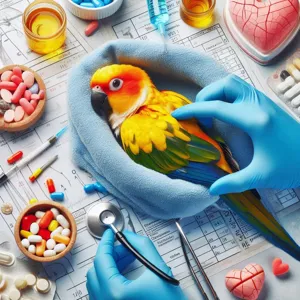
You should perform a ‘towel check’ or a visual inspection at least once a week. This involves observing your bird from a distance and, if they are tame, physically checking their body condition.
- The Keel Bone Test: Gently feel your parrot’s chest. The keel bone (the sternum) should be felt but not sharp. If it feels like a knife edge, your bird is dangerously underweight. If it is buried in fat, they are obese.
- Respiratory Rhythm: A healthy parrot breathes silently. If you hear clicking, wheezing, or notice the tail bobbing in time with each breath, you are likely looking at a respiratory infection or air sacculitis.
- Eye and Nare Clarity: Any discharge around the nostrils (nares) or eyes is abnormal. A healthy bird should have clear, dry openings. Moisture or crusting suggests infection or environmental irritation.
Decoding Droppings: The Daily Health Report
The most reliable metric of your bird’s internal health is their stool. It acts like a daily blood test. Ignore the myth that you shouldn’t worry about ‘a little change.’ You should check the paper lining the cage every single morning.
A healthy dropping consists of three parts:
- Feces: The solid, brown or green portion.
- Urates: The creamy, white or off-white material.
- Urine: The clear, liquid portion.
Warning signs: If the urates turn neon yellow or green, this is a classic sign of liver disease. If the feces disappear and you only see large amounts of clear liquid (polyuria), it indicates systemic illness or renal stress. Never treat diarrhea as a minor issue; in birds, it is often a sign of gastrointestinal infection that can cause dehydration within hours.
Behavioral Shifts: The Silent Alarms
Physical symptoms are often late-stage indicators. Behavioral changes are usually the first warning. A parrot that suddenly becomes quiet, loses interest in foraging, or stops ‘flocking’ with you is telling you they are conserving energy to fight an illness.
Common Red Flag Behaviors
- The ‘Fluffed’ Posture: If your parrot spends the day sitting puffed up with its head tucked into its back feathers, it is trying to maintain body temperature because it has a fever or is suffering from hypothermia. This is an immediate emergency.
- Social Withdrawal: Parrots are flock animals. If your bird refuses to leave the cage or avoids eye contact when you enter the room, they are likely feeling vulnerable and ill.
- The ‘Tail-Flip’ or Bobbing: This is an indicator of labored breathing. Because birds lack a diaphragm, they use their abdominal muscles to move air. If those muscles are working hard, you will see the tail move up and down with every breath.
Field Experience: Mistakes Owners Make
The biggest error I see in the field is the ‘wait-and-see’ approach. Owners often assume, ‘He will be better tomorrow.’ By the time tomorrow comes, the parrot’s metabolic rate—which is incredibly high—has allowed the illness to progress significantly.
Another classic error: Assuming that because the bird is still eating, it is not sick. Parrots will continue to ‘act’ normal and even eat in front of you due to the survival instinct of hiding weakness. By the time they stop eating, they are often in a state of crisis. Do not wait for appetite loss to seek help.
Setting Up Your Proactive Monitoring Kit
To act effectively, you need the right tools at home:
- Gram Scale: Buy a digital kitchen scale that measures in grams. Weigh your bird at the same time each morning. A 10% weight loss in a parrot is equivalent to a human losing 15-20 pounds in a week—it is massive and requires a vet visit.
- Hospital Cage: A smaller, secondary cage with a heating pad or ceramic heat emitter allows you to keep an ill bird warm. Maintaining their body temperature is the most important first-aid step while arranging transport to a vet.
- Avian Vet Contacts: Do not search for a vet when the bird is already dying. Keep the contact of a certified avian veterinarian (not just a cat/dog vet who ‘sees’ birds) on your fridge.
Conclusion: Your Role as an Advocate
You are your parrot’s only advocate. They cannot describe their pain or specify where it hurts. Your ability to distinguish between a behavioral quirk and a medical emergency is the ultimate skill in avian husbandry. Trust your eyes and your scale over your desire to believe the bird is ‘just tired.’ If you see one of these signs, don’t guess; contact a specialist immediately.
Content updated on 2026-10-17