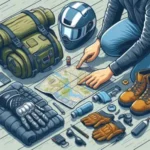
Choosing the Right Gear for Motorbike Camping

Motorbike camping requires a shift in mindset compared to car camping. You are not just packing for comfort; you are packing for two wheels. Weight distribution affects your steering, braking, and overall balance. Every item must serve at least two purposes, or you should leave it at home. This guide focuses on technical gear that balances packability with real-world performance.
The Tent: Prioritizing Packability

Your tent acts as your base camp. Avoid bulky designs that require long poles, as these act like sails in the wind and widen your bike’s profile. Look for tents with pole segments shorter than 15 inches to fit inside standard panniers.
- Freestanding designs: Opt for tents that don’t require stakes to stand. This is crucial when you reach a campsite with hard, rocky ground where stakes simply won’t penetrate.
- Large vestibules: Treat the vestibule as your secondary garage. This area keeps your helmet, heavy jacket, and wet boots outside your sleeping space while remaining protected from the elements.
- Pole length: Always check the folded length of the pole set. If it doesn’t fit horizontally in your side case, it will likely get strapped to the outside, where it risks snagging on brush or vibrating loose.
Sleeping Systems: Heat Management
A poor night’s sleep turns a fun trip into a safety hazard. Exhaustion on a bike leads to delayed reaction times. Insulation is not just about the sleeping bag; it is primarily about the pad.
- Understanding R-Values: The R-value measures resistance to heat flow. Think of it like the insulation in your house walls. If your sleeping bag is a blanket, your pad is the foundation that stops the cold ground from acting like a massive heat sink. Aim for an R-value of 3.0 or higher.
- Material choice: Down insulation offers the best warmth-to-weight ratio and compresses to the size of a water bottle. However, synthetic insulation is the professional choice for unpredictable weather. It retains loft and warmth even when damp, unlike down, which clumps and fails when wet.
- Mummy shapes: While they feel snug, mummy bags reduce dead air space. Less empty space means your body heats up the bag much faster.
Technical Cooking and Hydration

You need a setup that allows for a 5-minute transition from riding to eating. Complex camp kitchens take up precious space and require too much maintenance.
- Titanium cookware: Titanium is lighter than steel and cools down almost instantly. This means you can boil your water, finish your meal, and pack the pot into your bag before it’s even lukewarm.
- Filtration systems: Carrying five liters of water is dead weight that ruins your handling. Carry a hollow-fiber membrane filter like those used by thru-hikers. It allows you to draw water from streams, reducing your load significantly.
- Multipurpose tools: Use a long-handled titanium spork. It reaches the bottom of dehydrated meal bags without getting your knuckles dirty with food residue.
Field Repair Essentials: Self-Reliance

You should not carry a full shop, but you must be able to handle common trail-side failures. Know your bike’s weak points before you leave the driveway.
- Tire repair: A puncture is the most common reason for a stranded rider. Carry a high-quality plug kit, a set of compact tire irons, and a mini-compressor powered by your bike’s battery. Hand pumps are insufficient for motorcycle tires.
- Metric hex sets: Most modern motorcycles rely on metric hardware. Ensure your kit includes every size found on your fairings and crash bars.
- Zip tie physics: Zip ties are the duct tape of the mechanical world. Use them to secure loose panels, flapping wires, or a broken luggage strap. They offer a rigid hold that temporary tape cannot provide.
Load Balancing and Packing Strategy
Your goal is to keep the center of gravity as low as possible. Unbalanced loads will cause your bike to wallow in corners or feel twitchy at highway speeds.
- Heavy items low: Place heavy tools, fuel bottles, and water as deep and low as possible in your panniers. Think of this as lowering the ballast on a boat to prevent it from capsizing.
- Centralizing mass: Keep heavy gear close to the bike’s frame, not the outside edges of the luggage. This keeps the mass centered, maintaining your bike’s original handling characteristics.
- Accessibility layout: Always store your rain gear and a basic first-aid kit in the top lid of your bag. You should be able to reach these in ten seconds during a sudden downpour without dumping your gear on the ground.
Pro-Tips and Common Pitfalls
- The Dry Bag Rule: Never trust the factory waterproof claims of cordura luggage. Line every pannier with dedicated, high-denier dry bags. This ensures your sleeping gear stays dry even if you drop the bike in a creek.
- Avoid the Backpack: Never wear a heavy backpack while riding. It fatigues your shoulders and ruins your center of gravity. Transfer all weight to the bike’s frame and luggage racks.
- The Two-Trip Rule: If you bring an item on two trips and never use it, remove it from your kit. Minimalism is the only way to keep a motorbike agile.
Contenu mis a jour le 2026-08-23