Is industrial machinery/components a good career path?
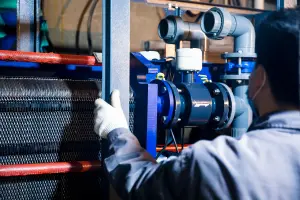
Choosing a career in industrial machinery is a calculated move into the bedrock of the global economy. By 2030, the industrial machinery market is projected to reach approximately 900 billion dollars. Unlike speculative digital sectors, this industry produces tangible output that underpins energy grids, food processing, and logistics. If you seek a career where your influence is physically measurable, this path is highly viable.
The economics of the sector: Why demand exceeds supply
The industrial sector is currently facing a massive labor imbalance. According to recent manufacturing labor statistics, the United States alone could face a shortfall of over 2 million skilled manufacturing workers by 2030. This supply-demand gap is your greatest financial lever.
When a production line stalls, it costs facilities anywhere from 5,000 to 20,000 dollars per hour in lost revenue. If you possess the specialized skills to minimize this downtime, your compensation will reflect the value you protect. This is not just a job; it is a high-stakes problem-solving role that commands premium pay scales compared to generalist administrative positions.
Defining your technical leverage
The days of manual labor being the sole requirement are over. Modern machinery relies on a fusion of heavy mechanics and digital feedback loops. Think of this like a car: the chassis is the physical component, but the sensor array and onboard computer are the brain that keeps it moving. You must master both.
- Industrial IoT (IIoT) Integration: You are installing the nervous system of the factory. You enable machines to transmit predictive data before a catastrophic failure occurs.
- Programmable Logic Controllers (PLCs): These are the specialized computers that control automated systems. Mastering PLC programming moves you from an operator to a system architect.
- Robotic Systems Maintenance: As factories prioritize efficiency, high-speed robotics are standard. Expertise here is highly portable across the automotive, pharmaceutical, and aerospace sectors.
Field experience: The 80/20 rule of engineering
A common error for junior professionals is over-reliance on CAD models and digital simulations. Theoretical design often ignores the friction of reality. I have seen engineers design parts that look perfect on screen but require an impossible angle for a technician to access with a wrench.
Spend 80 percent of your early career on the shop floor and 20 percent at the design desk. If you want to understand how a component wears out, you must observe it under thermal stress and vibration in a real environment. This field experience creates a deep technical intuition that no textbook can replicate.
Case study: The cost of the rookie mistake
I once consulted for a plant that suffered recurring pump failures. The original design engineers focused purely on throughput. They failed to account for the mineral buildup caused by local water hardness, which jammed the internal seals every three months.
A field-experienced technician identified the issue by simply monitoring the heat signatures of the seals. By swapping to a self-lubricating seal material, we reduced downtime by 40 percent. This saved the company 150,000 dollars annually. This is the definition of value-add: identifying physical constraints that software cannot see.
Critical soft skills for industrial success
Technical brilliance is useless if you cannot communicate the risk to management. Your success depends on your ability to perform technical translation.
- Root Cause Analysis: Treat every breakage as a detective case. Never swap a fuse and walk away. Always find the electrical short that blew it.
- Bridging the Gap: You will interface with floor operators, plant managers, and procurement officers. Adjust your vocabulary to match your audience without losing technical accuracy.
- Safety as a Metric: Respecting SOPs (Standard Operating Procedures) is not just about compliance. It is about professional discipline. A safety-conscious engineer is seen as a lower-risk asset by employers, which accelerates career progression.
Mapping your career trajectory
Start your career by chasing the most complex machinery you can find. Seek out roles that require hands-on troubleshooting. After three to five years, transition into specialization. Certification programs, such as those for Six Sigma or specific robotic architectures like Fanuc or Siemens, are force multipliers.
Build your career like a compounding interest account. Every new machine you master increases your hourly value. While peers in other industries face burnout from ephemeral trends, you are building a portfolio of skills that remains essential for as long as the world produces physical goods.
Content updated on 2026-09-03