Technical Selection Criteria for Blenders
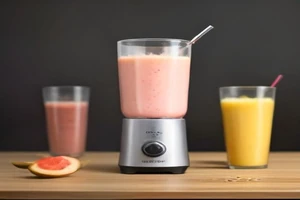
Common issues like fibrous chunks in smoothies or motor overheating stem from inadequate torque. A high-performance blender requires a motor delivering at least 1200 watts to process frozen ingredients consistently. You must prioritize models with stainless steel blades, specifically grade 304 or 420, to prevent oxidation and maintain sharpness. Most amateur users overlook blade geometry, yet six-wing designs generate superior cavitation for emulsification.
When selecting your appliance, check for a minimum rotation speed of 20,000 RPM. Lower speeds fail to break down cellulose walls in kale or tough stems, leaving unpleasant textures. I frequently encounter users complaining about burnt smells; this occurs because the motor lacks an internal cooling fan system. Always verify the presence of a metal-to-metal drive coupling instead of plastic to ensure longevity under heavy loads.
The Top 10 High-Performance Blenders
Based on durability and shear force, here are the top 10 models for achieving uniform consistency:
- Vitamix A3500: Features a 2.2 peak horsepower motor and programmable digital timers.
- Blendtec Designer 650: Uses a blunt-blade design that relies on speed rather than sharpness for safety.
- Ninja Professional Plus: Offers 1400 watts with a stacked blade assembly for crushing ice effectively.
- Breville Super Q: Equipped with a 1800W motor and a noise-suppression technology housing.
- KitchenAid K400: Includes a unique 3-part blending system for consistent textures regardless of ingredients.
- Oster Versa Pro: Provides a 1400-watt motor at a lower price point than professional rivals.
- Cleanblend 1800W: A high-power utility blender with a stainless steel bearing assembly.
- Wolf Gourmet High-Performance: Features variable speed control and a thermal protection system.
- NutriBullet Smart Touch: Delivers 1500 watts with a touchscreen interface for precise control.
- Jamba Appliances Quiet Shield: Utilizes a sound enclosure to reduce decibel levels during operation.
Maintenance and Operational Hazards
Engine failure often results from overloading the pitcher above the maximum liquid line. L’erreur classique ici consiste à remplir le bol avec des ingrédients congelés sans ajouter de liquide. This creates a vacuum lock that stalls the motor. Ensure your ratio remains 60% liquid to 40% solids for optimal performance.
In workshop settings, I see too many damaged rubber gaskets. These components degrade when exposed to boiling temperatures or harsh chemical detergents. Stick to room temperature rinsing and ensure the pitcher is completely dry before storage to prevent bacterial growth. If your blender base has air intake vents, ensure they remain free of dust.
Optimizing Smoothie Consistency
Achieving a smooth texture depends on the sequence of ingredient loading. Start by placing liquids at the bottom to create a vortex. Follow with powders, then soft ingredients, and finish with frozen items or ice on top. This order allows the blades to pull ingredients downward effectively.
Harder ingredients like ginger or seeds require a pulse cycle first. Most users jump to high speed immediately, which creates air pockets near the blades. Using a tamper to guide ingredients into the blade path ensures total processing. If the blender stalls, stop immediately, stir with the tamper, and restart at the lowest speed setting to clear the obstruction.